Effective Global Pricing Practices That Preserve Brand Value and Drive Growth in International Markets
February 6, 2026
Effective global pricing balances local market realities with brand value by using strategies like value-based, premium, competitive, and dynamic pricing while managing perception, legal compliance, and cross-market consistency.

Estimated Reading Time: 9 minutes ┃Post by Marcus Feldman
Strategic Foundations of International Pricing
Entering new international markets represents a defining moment for any brand seeking to scale, and pricing lies at the heart of the strategic challenge. International pricing strategy is the deliberate process of setting prices for products or services sold across borders while balancing economic, cultural, and competitive forces. Unlike domestic pricing, which can often rely on stable cost structures and a single market context, global pricing must harmonize disparate factors that affect how consumers perceive value internationally. These include local purchasing power, regulatory constraints, currency fluctuations, and competitive landscapes that vary dramatically from one region to another. Best-in-class strategies extend beyond cost-plus formulas to incorporate market intelligence and demand sensitivity to optimize revenue while preserving brand promise in each locale.
The first strategic consideration is deciding on the pricing architecture: whether to standardize prices globally or adapt them to local conditions. Standardization promotes brand consistency and simplifies operations, ensuring that the core brand message ● and by extension its perceived value ● is uniform across markets. However, strictly uniform pricing often ignores significant variations in local economic conditions and consumer expectations. Conversely, localized pricing acknowledges market realities ● cost structures, consumer income levels, tax regimes, and competitive pressures ● but can introduce complexity and risk perceptions of inconsistency if not communicated properly. Successful brands craft a hybrid pricing model that preserves global brand identity while adapting to the affordability and competitive expectations of each targeted market.
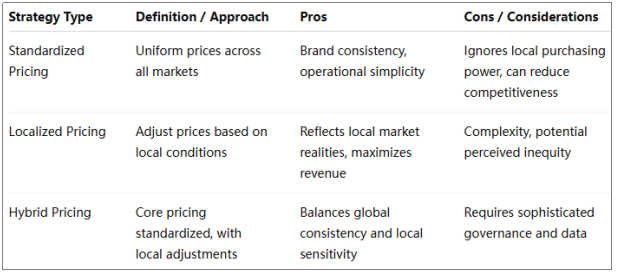
(Table 1- Global Pricing Strategy Approaches)
A related strategic imperative is understanding the spectrum of pricing methodologies available. Traditional cost-plus pricing ensures that every product sale covers incurred costs plus a margin, delivering predictable contributions to profitability, but it risks missing competitive realities and consumer value perceptions. Market-based pricing aligns prices with prevailing national or regional competition and demand conditions but demands rigorous and continuous data collection. Value-based pricing ● placing price points where consumer expectations of quality and brand prestige justify them ● is especially powerful for premium segments where brand equity drives willingness to pay. Dynamic and adaptive approaches then adjust prices over time in response to real-time market feedback and competitor moves, often enabled by advanced analytics and digital pricing systems.
At its core, international pricing is not simply a numerical exercise. It is a form of value communication. Price becomes a signal of quality, exclusivity, or fairness that shapes brand equity and long-term loyalty. Indeed, pricing strategy has a measurable impact on brand equity: pricing approaches that foreground value and quality strengthen consumer perceptions, whereas arbitrary or unexplained price variations can diminish trust and erode a brand’s perceived consistency. Integrating pricing strategy with broader brand positioning and messaging frameworks ensures that price supports, rather than undermines, the brand narrative.
Tactics That Balance Local Market Reality with Global Brand Equity
With strategic frameworks in place, executives must choose the tactical approaches that will sustain growth without diluting brand equity.
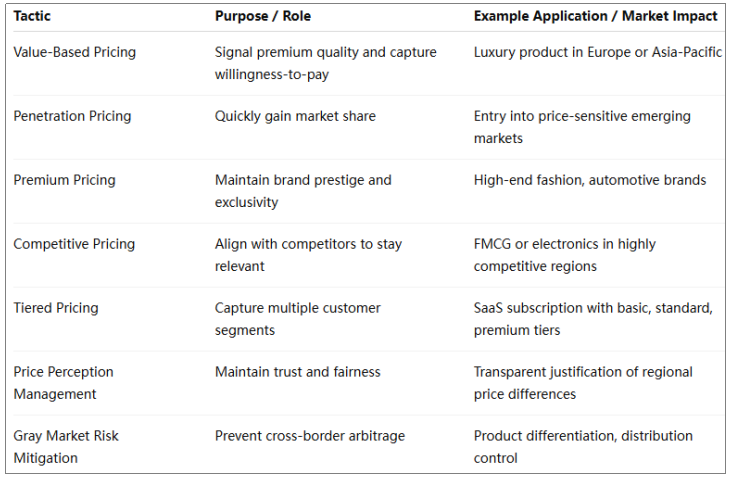
(Table 2- Tactical Approaches in International Pricing)
One foundational tactic is value-based pricing, which sets prices according to the perceived benefits of the product or service rather than simply covering costs or matching competitors. This method requires deep insight into what different customer segments value and how that value translates into willingness to pay in each market context. Value-based pricing typically supports higher margins in markets where brand prestige and product differentiation are highly prized.
Another common international tactic is penetration pricing, where a lower price point is used intentionally at market entry to gain traction quickly. This approach can accelerate adoption and build critical mass in price-sensitive regions, but it must be deployed carefully. If a brand enters too aggressively on price, it may attract buyers on the basis of cost alone, making it difficult to later reposition the offering as a value or premium brand without losing credibility. The sequencing of pricing strategies ● for example, entering with a lower price and gradually elevating it as market acceptance and brand familiarity grow ● must align with customer expectations and competitive responses.

For premium or luxury brands, premium pricing supports equity by signaling exclusivity and quality. This tactic allows brands to differentiate themselves from mass-market competitors and reinforces a perception of superior craftsmanship or experience. However, premium pricing requires consistent delivery on the added value promised, as any gap between price and perceived benefit can undermine credibility. It also requires adaptive communication that conveys why higher prices are justified in each market segment.
Competitive pricing is a related tactic that leverages deep benchmarking of local competitors when setting prices. In markets where competition is fierce and offerings are relatively undifferentiated, aligning prices with key competitors helps maintain relevance without eroding margins unnecessarily. Competitive pricing is especially useful in markets where entry costs are high and local incumbents wield strong influence over consumer expectations. At the same time, companies must avoid a race to the bottom; differentiating through product enhancements, customer service, or bundled offerings often complements competitive pricing measures.

A particularly nuanced tactical challenge in global pricing is price perception management. Digital platforms and global access to information mean that consumers can easily compare prices across markets, which can lead to perceptions of unfairness if significant disparities exist without clear justification. Transparent communication about localized market conditions ● including logistics costs, regulatory burdens, and service level differences ● helps mitigate misunderstandings. Brands that provide context for pricing variances build trust and mitigate negative effects on global brand equity.
Furthermore, the integration of technology in pricing ● including dynamic pricing systems that adjust in real time based on demand, competition, and inventory ● enables firms to balance responsiveness with strategic consistency. While these systems can optimize short-term revenue, careful governance is required to ensure they do not produce erratic pricing that confuses or alienates global customers. Effective governance includes clear rules for pricing boundaries, alignment with overall brand positioning, and integration with marketing and communication strategies at the local level.
International pricing also intersects with legal and regulatory frameworks. Price discrimination laws, anti-dumping statutes, and different tax environments all influence how prices can be set and adjusted across borders. Compliance not only minimizes legal risk but also shapes consumer perceptions of fairness and trustworthiness, which feed back into brand equity.
For subscription-based business models, tiered pricing adds another layer of flexibility by appealing to multiple customer segments within a single market. Offering basic, standard, and premium tiers allows brands to capture a broader portion of the willingness-to-pay curve, balancing accessibility with aspirational value. This approach enhances customer choice and can increase loyalty by providing clear upgrade paths that reinforce perceived value.
Finally, price coordination and gray market risk management is a tactical priority for global brands.
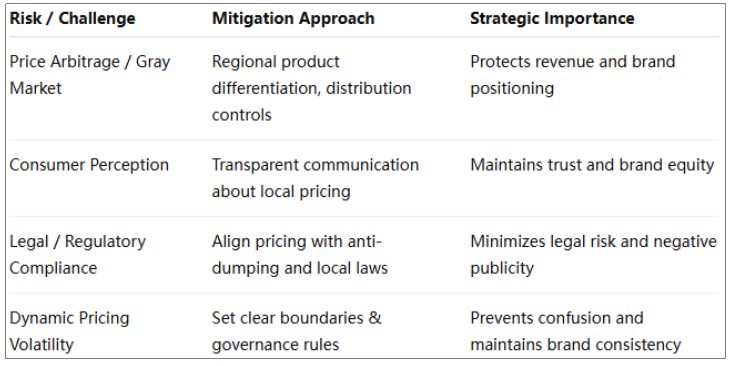
(Table 3- Risks & Governance in Global Pricing)
Significant price differences across markets can create incentives for gray market activity, where products intended for lower-priced regions are resold into higher-priced ones. This not only affects revenue but also confuses brand positioning and undermines authorized distribution channels. Strategies to manage these risks include tighter channel controls, harmonized pricing corridors, and differentiated product versions by region to reduce arbitrage appeal.
Updated April 5, 2026
About the Author
Dr. Marcus Feldman is an international business strategist and pricing expert with over 15 years of experience helping global brands optimize revenue while preserving brand equity. He specializes in cross-border pricing strategies, market intelligence, and consumer value perception, providing actionable guidance for companies navigating complex international markets.
References
[1] Fiveable. Key international pricing strategies.
[2] Public Media Solution. (2024). International pricing strategies: Balancing profit and market penetration.
[3] SLM MBA. International market pricing strategies.
[4 ]Trade Ready. (2024). 5 pricing strategies for international markets.