The Strategic Role of Blockchain in Modern Supply Chain Transformation
February 14, 2026
Key Takeaways:
● Blockchain enhances supply chain transparency, traceability, and accountability across multiple stakeholders.
● Real-world deployments show measurable improvements in sectors like food, logistics, and luxury goods.
● Challenges include scalability, integration with legacy systems, data accuracy, and regulatory complexities.
● Long-term adoption strengthens supply chain resilience, operational efficiency, and global competitiveness.
Estimated Reading Time: 8 minutes┃Post by Michael Thompson
Blockchain’s Role
in Transforming Global Supply Chains
The global supply chain has historically been
characterized by complexity, opacity, and inefficiencies. Goods traverse many borders and
touchpoints — from raw material suppliers to manufacturers, distributors, retailers, and finally
end consumers — creating a network that is difficult to monitor comprehensively with traditional
systems. These legacy supply chains often rely on siloed databases, paper-based documentation,
and centralized record-keeping, which are prone to errors, delays, fraud, and disputes.
Traditionally, lack of end-to-end visibility has constrained supply chain resilience and
responsiveness, resulting in poor traceability, duplicated efforts, and increased operational
risk. In response, enterprises and governments alike are exploring how blockchain — a
decentralized, immutable ledger technology originally developed for cryptocurrencies — can
fundamentally rewire the way global supply chains operate.
Blockchain’s core advantage is its ability to provide an immutable, distributed record of transactions that is transparent to all authorized stakeholders. Unlike conventional databases controlled by a single entity, a blockchain ledger is decentralized and cryptographically secured, meaning that data once recorded cannot be retrospectively altered and is shared across multiple network participants. This design inherently strengthens trust among supply chain partners and reduces reliance on intermediaries. In essence, blockchain replaces disparate ledgers with a single source of truth, thereby addressing long-standing challenges around visibility and data integrity in global trade networks.

The growing interest in blockchain among supply chain decision-makers is not mere hype. Initiatives such as the World Economic Forum’s Redesigning Trust with Blockchain in the Supply Chain project underscore its strategic potential to bring alignment and standardization to a historically fragmented industry. This initiative involves collaboration between major ports, logistics providers, importers, exporters, and blockchain innovators, and reflects a global recognition that blockchain could be a foundational technology for modern trade.
Real-world deployments already demonstrate blockchain’s capacity to enhance supply chain operations. For example, the IBM Food Trust Network — deployed by Walmart to track food products — enables stakeholders to trace the source of food items and verify safety and quality in seconds, a task that previously could take days. Similarly, the TradeLens platform developed by shipping giant Maersk and IBM digitizes shipping documentation to provide real-time visibility into cargo movements, reducing paperwork and administrative delays. De Beers, the diamond producer, uses blockchain to ensure diamonds are ethically sourced and tracked from mine to market, countering longstanding issues with conflict diamonds.
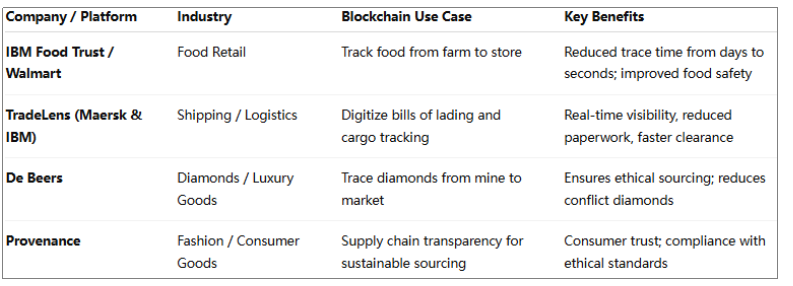
(Table 1- Real-World Blockchain Supply Chain Applications)
These developments illustrate a broader trend: blockchain is transitioning from theoretical discussions to practical tools that deliver measurable supply chain improvements. Its applicability extends across industries — from food safety and pharmaceuticals to luxury goods and heavy logistics — demonstrating that the technology can accommodate diverse product lifecycles and risk profiles. As blockchain adoption continues to expand, its transformative effects on global supply chain architectures are becoming increasingly evident.
Key Benefits and
Emerging Challenges of Blockchain Integration
Among the most compelling advantages of
integrating blockchain into supply chains is enhanced transparency and traceability.
Blockchain’s ledger allows all parties — manufacturers, logistics providers, regulators, and
consumers — to view an unbroken chain of custody for goods as they move from origin to
destination. This is especially valuable in sectors where safety and compliance are paramount,
such as food and pharmaceuticals, because companies can quickly identify the source of defects
or contamination and respond effectively. Such traceability not only improves consumer
protection, but also helps companies meet stringent regulatory requirements and demonstrate
compliance with sustainability or ethical sourcing standards.
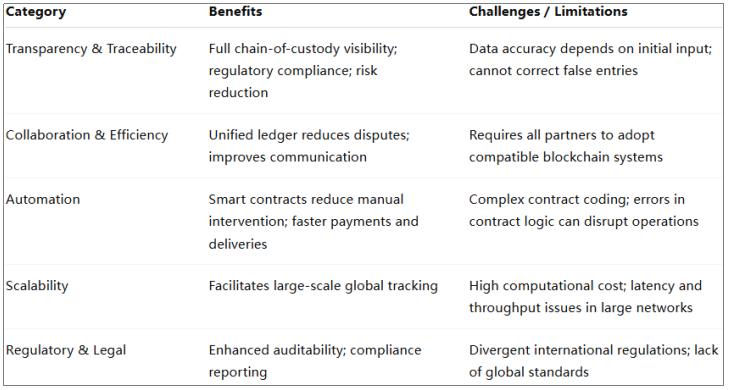
(Table 2- Key Benefits vs Emerging Challenges of Blockchain in Supply Chains)
Blockchain also fosters improved collaboration among supply chain partners. Because each stakeholder accesses the same validated data, disputes over transaction details diminish, communications improve, and coordination becomes more efficient. Shared blockchain ledgers allow companies to manage supplier onboarding, performance, and compliance documentation more efficiently than conventional systems, which often require reconciliation across multiple databases. In effect, blockchain creates a unified platform for information sharing that breaks down silos and accelerates decision-making.
Operational efficiency is another major benefit. Smart contracts — self-executing agreements coded into the blockchain — can automatically trigger actions such as payments on proof of delivery or release of goods once predefined conditions are met. By embedding business rules directly into the transaction process, smart contracts reduce manual intervention, shorten cycle times, and cut administrative costs. This kind of automation is particularly relevant in global logistics, where cross-border transactions and timetables can impede throughput. Such automation not only expedites workflow, but also mitigates errors that arise from human intervention and redundant paperwork.
Nevertheless, blockchain adoption in supply chains is not without meaningful challenges. Scalability and performance constraints remain a significant obstacle, especially for global operations that process massive volumes of transactions in real time. Many blockchain networks, particularly public ones, struggle with throughput limitations, latency, and high computational demands, which can lead to increased costs and slower transaction processing. This issue is especially acute in industries with high data volumes, such as automotive manufacturing or global logistics.
Integration with existing enterprise systems presents another challenge. Most organizations operate legacy ERPs, warehouse management systems, and logistics software that were not designed for blockchain interoperability. Bridging these systems with blockchain requires substantial technological investment, interoperability frameworks, and workforce training; smaller companies may find the resource requirements particularly burdensome. Moreover, blockchain does not validate the accuracy of data at the point of entry — incorrect or fraudulent data entered into the system remains immutable, potentially undermining the integrity of the ledger.

Regulatory and legal uncertainties also complicate global blockchain adoption. Different jurisdictions maintain divergent rules on data privacy, cross-border data flows, and distributed ledger technology governance. For multinational supply chains, navigating this regulatory patchwork requires adaptability and legal expertise. In addition, the absence of industry-wide standards and governance frameworks has hindered the seamless exchange of blockchain data across different networks and platforms, slowing the pace of widespread adoption.
Despite these hurdles, forward-looking companies view blockchain as a long-term investment in supply chain resilience. Early adopters are already reaping benefits in transparency, risk reduction, and process efficiency that are becoming prerequisites in competitive global markets. As blockchain solutions mature — bolstered by collaborative initiatives, standardization efforts, and technological innovation — supply chains around the world are positioned to become more transparent, agile, and reliable.
(Use of any information published on this blog is at your own risk. In no event shall the author or this blog be liable for any direct, incidental, consequential, or punitive damages arising out of the use of such content.)
Updated March 29, 2026
About the Author
Dr. Michael Thompson is a supply chain technology consultant and blockchain strategist with over 15 years of experience in logistics, digital transformation, and global trade networks. He specializes in guiding multinational companies through the adoption of distributed ledger technologies, smart contracts, and data-driven supply chain innovations to enhance transparency, efficiency, and operational resilience.
References
[1] Pam Baker. TechTarget. (2024). 5 potential benefits of blockchain in supply chain logistics.
[2] World Economic Forum. (2025). Blockchain and supply chains.
[3] Nexa Desk. Outlook India. (2025). How is blockchain transforming supply chain management. -chain-management
[4] Manju Priya. ACTE. (2025). Blockchain in supply chain insights.
Recommended for you: