How Sustainability Messaging Must Evolve to Resonate Across Cultures Without Falling Into Greenwashing
March 23, 2026
Key Highlights:
● Sustainability marketing must balance global brand consistency with local cultural relevance.
● Vague or unsupported claims risk greenwashing, consumer skepticism, and regulatory scrutiny.
● Cultural differences shape how sustainability concepts are interpreted and received.
● Evidence-backed, transparent, and certified claims enhance credibility across markets.
● Engaging local stakeholders and educating consumers fosters trust and meaningful impact.

Estimated Reading Time: 8 minutes┃Post by Amina Rahman
Sustainability
Marketing in a Global Context
In today’s marketing landscape, sustainability is not merely a buzzword
— it has become a strategic imperative. Consumers around the world are increasingly aware of
environmental degradation, climate change, and the broader social impacts of corporate behavior.
As a result, brands are under mounting pressure to integrate sustainability into their value
propositions and communications strategies. Yet the intricate dynamics of
cross-cultural communication complicate this endeavor: what “sustainability" or
“eco-friendly" means in one society may differ substantially from another’s expectations and
norms. This variability becomes especially acute when marketers attempt to translate green
claims across cultural boundaries without falling into the trap of greenwashing — the practice
of making deceptive, exaggerated, or unsupported environmental claims as part of a marketing
strategy.
Greenwashing, broadly defined, describes marketing communications that convey a misleading perception of environmental responsibility. The ambiguity surrounding terms like "sustainable," "eco-friendly," or “carbon neutral" — often used without rigorous substantiation — has led to widespread consumer confusion and skepticism. Some research has identified pervasive effects where consumers exposed to greenwashing may develop “green confusion" or even “green cynicism," undermining trust in both individual brands and the broader sustainability movement.
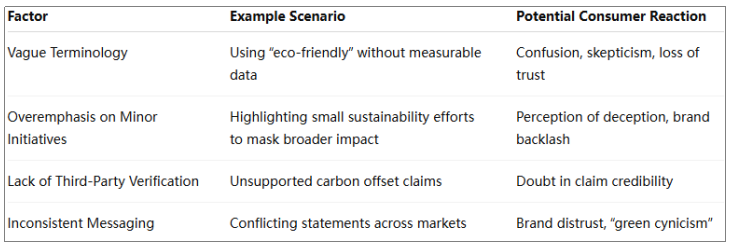
(Table 1- Risk Factors Contributing to Greenwashing)
The regulatory landscape is evolving in response. For example, the European Union has adopted legislation to ban generic or unsupported environmental claims that rely on tactics such as questionable carbon offsetting, enforcing stricter standards for what marketers may communicate as “environmentally friendly." This trend toward greater accountability highlights that sustainability messaging is not just a creative differentiator; it is increasingly subject to legal and ethical scrutiny.
As multinational campaigns proliferate, however, a core question emerges: Can sustainability messaging be effectively localized — translated for cultural nuance — without devolving into superficial or misleading green claims?
Cross-Cultural
Challenges and the Risk of Misinterpretation
At the heart of successful sustainability
marketing is the recognition that culture matters. Cultural values, communication
norms, and trust structures vary across societies and profoundly influence how environmental
messages are received. For instance, in some cultures, direct and explicit sustainability
messaging may resonate well; in others, indirect communication and context-rich storytelling may
be more persuasive.
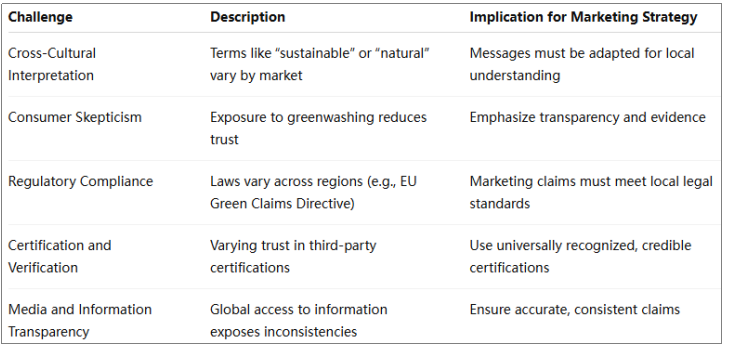
(Table 1- Key Global Sustainability Challenges for Marketers)
This cultural sensitivity extends to the very interpretation of environmental concepts. Words like “natural" or “sustainable" may carry distinct connotations. In some markets, “natural" may be synonymous with harmless or environmentally beneficial, while in others, it might simply denote origin without inherent ecological value. This interpretive variance means that a campaign framed one way in a Western context could be misread or even dismissed in another cultural environment.
Further complicating matters, trust in corporate and institutional sources — and in third-party certifications — varies by region. Brands operating in markets with historically low trust in corporate communications may find green claims treated with higher skepticism, even when backed by data. In such contexts, overt sustainability messaging without deeply rooted community engagement or verification can backfire, paradoxically increasing perceptions of greenwashing rather than fostering brand affinity.

The methodological challenges facing cross-cultural marketers are nontrivial. Researchers highlight that exploring environmental attitudes across cultures requires careful adaptation of language, surveys, and marketing instruments to ensure conceptual equivalence. Without this, even well-intentioned campaigns can fail to translate the core meaning of sustainability in ways that align with local values.
At the same time, brands that focus narrowly on global messaging without accounting for cultural context risk diluting impact. The global fashion industry, for example, has witnessed high-profile controversies where claims of sustainability provoked accusations of greenwashing due to vague language or disproportionate emphasis on peripheral sustainability initiatives relative to the company’s broader environmental impact.
In practice, effective cross-cultural sustainability marketing demands a nuanced approach that balances global brand consistency with localized relevance. Marketers must invest in cultural research — understanding not only language but values, symbols, and communication norms — to ensure that environmental claims resonate authentically. This goes beyond translation, requiring a fundamental reframing of how sustainability is presented within each cultural context.
Strategies for Authentic Global Sustainability Messaging
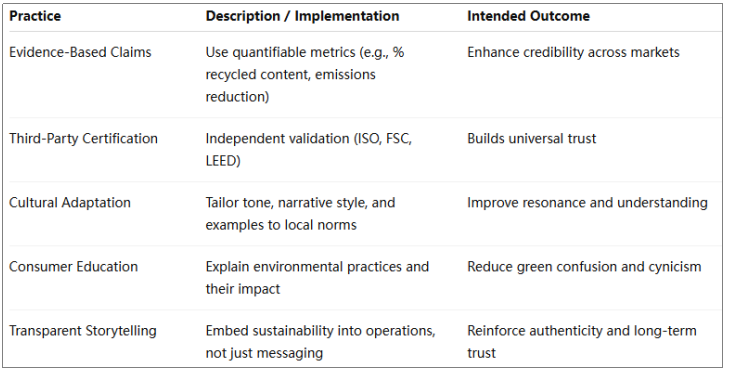
(Table 2- Best Practices for Cross-Cultural Sustainability Messaging)
To translate sustainability across cultures without lapsing into greenwashing, marketers must adopt a suite of strategic practices grounded in evidence, transparency, and cultural intelligence. One foundational principle is specificity: claims should be backed by data, measurable outcomes, and where possible, third-party validation. Vague buzzwords like “eco-friendly" without quantification or certification not only invite regulatory scrutiny but also fail to establish credibility with informed consumers.
Clear, fact-based language is essential. Rather than relying on broad assertions, brands should articulate the environmental benefits of specific actions or products, grounding claims in quantifiable metrics such as reduced emissions, recycled content percentages, or energy savings. Such specificity aids comprehension across cultures and mitigates ambiguity that could otherwise be exploited as greenwashing.
Transparency in sustainability narratives also plays a pivotal role. Rather than presenting sustainability as a marketing veneer, leading brands embed environmental responsibility into the core of their business model and operations. This enables storytelling that not only communicates environmental commitment but also demonstrates it through tangible practices.
Importantly, culturally adaptive communication does not imply tailoring messages in isolation. It requires collaboration with local stakeholders, consumers, and even certification bodies to ensure that sustainability messages align with cultural expectations and local concerns. Third-party certifications and transparent labeling systems can serve as universal anchors, offering credibility that transcends cultural boundaries.

Educating consumers about sustainable practices — rather than merely promoting them — is another dimension of avoiding greenwashing. By providing context and explaining why certain actions matter, brands help consumers interpret environmental claims in culturally meaningful ways. This approach can combat “green confusion," a phenomenon where consumers become overwhelmed or skeptical due to the proliferation of superficial environmental claims.
Finally, global marketers must monitor regulatory developments across jurisdictions. With regions like the European Union implementing stricter standards on environmental claims, including bans on unsubstantiated terminology, understanding legal requirements is critical for both compliance and ethical marketing.
In sum, sustainability messaging that travels successfully across cultural borders is both a science and an art — demanding rigor in evidence and empathy in communication. While the risk of greenwashing grows ever more pronounced in a hyper-connected world, marketers who ground their sustainability narratives in authenticity, transparency, and cultural insight are far better positioned to forge trust and drive meaningful engagement across global markets.
(This article contains interpretations of economic data which may be incomplete or open to alternative analysis. Readers are encouraged to review original sources where applicable.)
Updated April 7, 2026
FAQs:
1. What is greenwashing, and why is it a risk?
Greenwashing occurs when marketing exaggerates or misrepresents a brand’s environmental efforts. Vague claims like “eco-friendly" without evidence or certification can confuse consumers, lead to skepticism, and damage trust. Regulatory bodies are increasingly monitoring and penalizing unsupported sustainability claims.
2. What role do third-party certifications play?
Certifications and transparent labeling provide credibility across cultures. They help consumers verify claims, reducing the risk of skepticism and enhancing global trust in sustainability messaging.
3. What is “green confusion," and how can it be mitigated?
Green confusion arises when consumers encounter conflicting or vague sustainability claims. Brands mitigate it by providing clear, data-supported information, contextual education, and culturally relevant communication that clarifies the environmental benefits of products or actions.
Stay a while and dive into our other articles on digital marketing, brand building, and market analysis!