Why Relationships Are the New Economic Asset?
January 30, 2026
Relationships are now considered an economic asset because social capital—trust, networks, and connections—directly drives personal, organizational, and societal success.

Estimated Reading Time: 7 minutes ┃Post by Alex Greenwood
In today's interconnected world, a shift is taking place in how we measure wealth and success. No longer are traditional economic indicators like GDP or stock market performance the only markers of prosperity. A new form of economic value is emerging—social capital. This concept, which refers to the value derived from relationships, networks, and trust within communities, is increasingly seen as a vital asset in both personal and organizational success.
What is Social Capital?
At its core, social capital is about the relationships and networks individuals or organizations build within a community. It’s the trust, mutual support, and shared values that bind people together. As the world becomes more globalized and digitally connected, the importance of these relationships is magnified. The rise of the digital economy and the gig economy, for example, has shifted the focus from traditional, hierarchical structures to more fluid, network-based models. Businesses and individuals alike now thrive not just on capital and human resources but on the social ties they maintain and leverage.
But what does this shift mean for the economy at large? Traditionally, wealth has been defined in terms of material assets, like land, buildings, or financial resources. However, social capital changes that dynamic. It’s an intangible asset, but its effects can be just as powerful. Individuals with strong networks are more likely to gain job opportunities, access to valuable information, or support during tough times. For businesses, social capital can manifest in the form of loyal customers, trustworthy employees, or valuable partnerships that lead to growth and innovation.
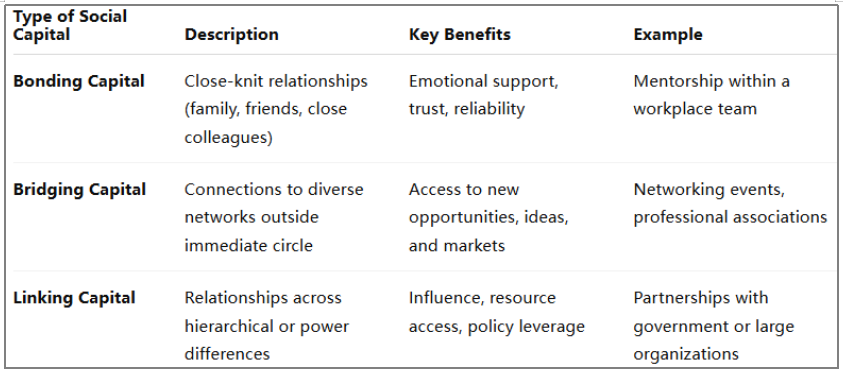
(Table 1- Types of Social Capital and Their Characteristics)
Moreover, the value of social capital isn't static. Just as economic policies and trends evolve, so does the way communities form and interact. In the past, social capital was often tied to geographical proximity—families and communities formed their networks based on shared physical spaces. Today, technology has expanded that notion, creating virtual communities that can have a global reach. As a result, people are now able to cultivate relationships across borders, time zones, and industries, creating new opportunities for collaboration and business development.
This shift is not without its challenges. Social capital, like any form of wealth, can be unevenly distributed. Not everyone has equal access to the networks or opportunities that can be created through social capital. There are also risks of exploitation or the reinforcement of inequality in communities where power structures are heavily skewed. These dynamics require careful attention to ensure that the benefits of social capital are accessible to all, rather than just a privileged few.
The Economic Value of Social Capital
The idea that relationships are an economic asset is nothing new. However, it is only in recent years that the full economic implications of social capital have started to be recognized. From Silicon Valley to small local businesses, the value of networks and relationships is central to modern economic success.
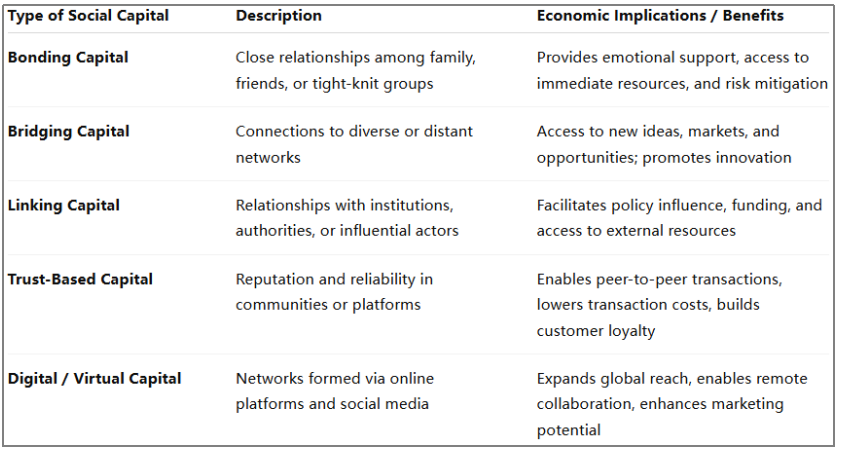
(Table 2- Forms of Social Capital and Economic Implications)
Take, for instance, the growing emphasis on collaboration over competition. In industries like technology, where rapid innovation is crucial, companies are increasingly valuing partnerships with other firms, universities, and even competitors. These collaborations—often based on shared trust and mutual benefit—have allowed for faster development of new technologies and business models. In this environment, social capital is more than just a "nice to have." It’s a key driver of innovation and success.
Furthermore, social capital has become a critical factor in human resource management. In today’s workforce, where remote work and freelancing are becoming more common, the ability to connect and collaborate with others is a key determinant of career success. Companies are beginning to understand that the traditional emphasis on individual performance is no longer enough. Employees who are able to tap into a robust network of colleagues, mentors, and industry connections are more likely to succeed in a rapidly changing job market.
Economists have started to recognize that social capital can have tangible, measurable impacts on economic growth. According to a study by the World Bank, countries with higher levels of social capital tend to have better outcomes in areas like education, health, and even economic development (World Bank, 2020). The study suggests that strong social ties contribute to a more stable and cooperative society, which in turn fosters a more favorable environment for business and innovation.

The economic value of social capital is also reflected in the increasing use of trust-based transactions in the marketplace. Peer-to-peer platforms like Airbnb, Uber, and Etsy thrive on the foundation of social trust. In these platforms, users rely on the reputation and reviews of others to gauge the reliability and quality of services or products. This reliance on trust signals that the value of social capital is extending beyond traditional business models into the digital economy.
However, not all types of social capital are equal. There are different forms, ranging from bonding capital, which involves close-knit relationships like family and friends, to bridging capital, which connects individuals to new and diverse networks. The most valuable form of social capital is often bridging capital, as it allows for the exchange of new ideas and opportunities. For businesses and individuals looking to expand, bridging capital opens doors to new markets, new ideas, and new partnerships that would otherwise be inaccessible.
The Future of Social Capital
As social capital continues to grow in importance, it’s clear that the future of the economy will be increasingly shaped by relationships and networks. We are seeing a shift in how wealth is created, moving away from purely financial assets and toward the intangible yet powerful asset of trust. This evolution requires businesses and individuals to rethink their approach to value creation and success.
One example of this shift can be seen in the growing trend of impact investing. Investors are no longer solely focused on financial returns but are increasingly considering the social and environmental impact of their investments. In this context, social capital plays a significant role in determining the long-term viability of a company or initiative. Businesses that prioritize community building, transparency, and ethical practices are better positioned to cultivate social capital that will drive future success.
On a broader scale, the future of social capital is closely tied to the ongoing digital transformation. Social networks and digital platforms will continue to redefine how people and organizations connect, collaborate, and create value. In this new landscape, those who can successfully leverage their social capital will have a significant advantage, whether they are individuals seeking career advancement or companies looking to expand their reach.
The rise of social capital is one of the most profound changes in the modern economy. It represents a shift in how we understand value—moving from a narrow focus on material assets to a broader recognition of the power of human relationships and trust. As social capital continues to shape the economy, the ability to build, maintain, and leverage meaningful relationships will become one of the most valuable skills for individuals and businesses alike.
(This article contains interpretations of economic data which may be incomplete or open to alternative analysis. Readers are encouraged to review original sources where applicable.)
Updated February 12, 2026
FQAs:
1. What is social capital, and why is it economically important?
Social capital refers to the value derived from relationships, trust, networks, and shared norms within communities. Unlike material assets, social capital is intangible, yet it influences access to opportunities, business growth, innovation, and personal success. Economically, strong social ties enable collaboration, information exchange, and trust-based transactions, all of which foster growth and stability.
2. How does social capital differ from traditional economic assets?
Traditional assets like money, land, or buildings are tangible and quantifiable. Social capital is intangible but powerful—it includes networks, trust, loyalty, and collaborative potential. Its effects can multiply opportunities, improve organizational efficiency, and even drive technological innovation through knowledge-sharing and partnerships.
3. What is the broader implication of viewing relationships as an economic asset?
The modern economy is increasingly driven by trust, collaboration, and networks rather than purely financial wealth. Businesses and individuals who cultivate, maintain, and strategically leverage relationships gain a competitive advantage, making social capital one of the most valuable assets in today’s interconnected world.
About the Author
Alex Greenwood is an economist and business strategist specializing in social capital, digital economy trends, and organizational development. Her research explores how relationships, trust, and networks drive innovation, market performance, and societal well-being in modern economies.
References
[1] Maria Thompson. (2018). Social capital, innovation and economic growth. ScienceDirect.
[2] Chiraz FEKI. HRMARS. (2019). The impact of social capital and entrepreneurship on economic growth: A panel data approach.
[3] Stewart R. Clegg & James R. Bailey. SAGE Knowledge. Social capital.
[4] MDPI. (2020). A Meta-Analysis on the Impact of Social Capital on Firm Performance in China’s Transition Economy. Sustainability, 12(7), 2642.