The Economic Impact of AI and Automation Adoption
April 1, 2026
AI and automation are transforming traditional industries by enhancing efficiency, enabling data-driven decision-making, and creating new business models, while also reshaping labor markets and competitive dynamics across global economies.
Estimated Reading Time: 9 minutes ┃Post by Emily Chen
The Rise of Intelligent Automation in Long-Standing Economic Pillars
Across global economies, artificial intelligence (AI) and automation technologies are no longer fringe innovations; they are reshaping the core of traditional industries, driving new efficiencies, and redefining competitive advantage in established sectors. The integration of machine learning, robotics, and advanced analytics has accelerated beyond early applications of simple mechanization, entering realms where systems can make decisions, optimize processes, and even predict future outcomes with increasing accuracy. This shift reflects broader technological waves such as “Industry 4.0", where AI, coupled with sensors and cyber-physical systems, enables smart factories, dynamic supply chains, and fully networked production ecosystems.
In manufacturing, AI and automation are fundamentally altering production lines and operational models. Traditional factories that once relied on human labor for repetitive assembly tasks are being outfitted with computer vision systems and robotic arms that perform welding, packaging, and inspection with higher speed and precision than human operators could achieve. These systems not only reduce waste and defect rates, but also empower predictive maintenance strategies that anticipate equipment failures before they occur, minimizing costly downtimes and improving uptime metrics.
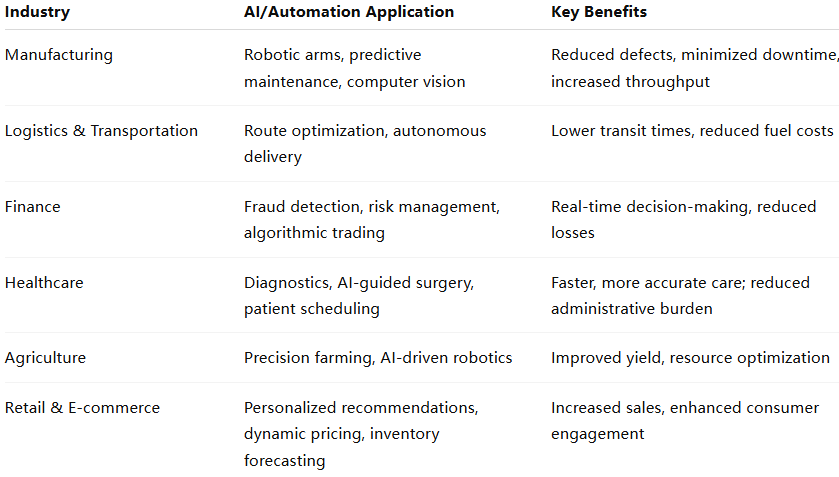
(Table 1- AI Applications Across Traditional Industries)
This transformation is not limited to industrial giants. Small and medium enterprises are adopting AI tools to automate forecasting, inventory control, and customer engagement, democratizing access to technologies once available only to large firms. In sectors like logistics and transportation, AI-driven route optimization and autonomous delivery systems are streamlining last-mile processes, cutting transit times, and reducing operational costs. These advancements illustrate a broader trend: legacy industries are expanding their technological footprints to meet contemporary demands for speed, scalability, and resiliency.
Alongside operational enhancements, AI has introduced a paradigm shift in decision support and data utilization. In finance, for example, AI algorithms process vast datasets in real time to detect fraud, manage risk, and automate trading operations, enabling financial institutions to reduce losses and personalize client services. According to industry analyses, financial firms deploying AI tools are now able to execute complex tasks—such as reviewing legal documentation or optimizing asset portfolios—in fractions of the time previously required, increasing throughput and reducing manual workload.
Healthcare, a sector historically resistant to digital automation due to regulatory complexities and ethical constraints, is experiencing significant AI adoption in diagnostics and patient care. Machine learning systems analyze medical images, genetic data, and clinical records to support faster and more precise diagnostic decisions. Robotics systems guided by AI are assisting in surgeries with greater dexterity while reducing patient recovery times. Even administrative tasks such as appointment scheduling and billing management are being streamlined through AI solutions that cut costs and reduce clinician burden, allowing healthcare professionals to focus more on patient outcomes than paperwork.

Agriculture and food production, often perceived as deeply traditional, are also in the midst of a technological renaissance. Precision farming systems harness AI alongside the Internet of Things (IoT) to analyze soil conditions, forecast weather impacts, and automate planting and irrigation schedules. Robotics platforms equipped with AI-driven computer vision engines can perform nuanced tasks such as weeding or harvest sorting, reducing reliance on labor and enhancing yield quality. These applications not only boost productivity but also support sustainable practices by optimizing resource use.
Yet, this technological shift carries broader economic implications beyond task automation. AI adoption is stimulating new business models and economic opportunities, pushing industries to reimagine value chains and competitive positioning. In retail and e-commerce, for instance, AI-driven algorithms power personalized marketing, dynamic pricing, and automated customer service platforms that improve consumer engagement and drive sales. Stores and digital platforms now leverage data to forecast demand, manage inventory in real time, and create seamless omnichannel experiences that bridge physical and digital commerce.
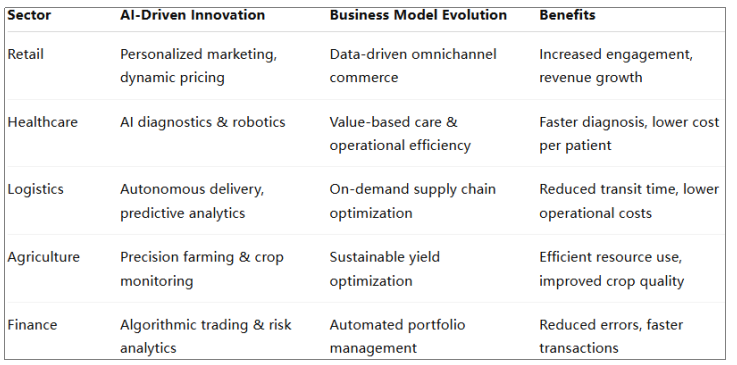
(Table2- AI’s Role in New Business Models)
Economic and Labor Market Dynamics in an Automated Era
The widespread deployment of AI and automation technologies in traditional industries has sparked considerable debate regarding labor market outcomes, economic growth, and the future of work. Proponents argue that automation enhances productivity and competitiveness, contributing to overall economic expansion as firms reduce costs and scale operations. Research suggests that when AI and automation are paired with complementary investments—such as workforce training and digital infrastructure—productivity gains can mirror those observed during earlier industrial revolutions, positioning economies for long-term growth.
However, the relationship between automation and employment is complex. As machines take over routine, repetitive tasks, certain job roles become redundant, especially in sectors like manufacturing and data entry. These shifts amplify pressure on workers whose skills are tailored to functions that AI can perform more efficiently. At the same time, new categories of jobs are emerging in fields encompassing data science, AI system maintenance, and robotics programming, where human expertise complements machine capabilities. The challenge for policymakers and firms is to manage this transition by facilitating retraining and upskilling programs that align workforce capabilities with evolving technological demands.
Economic models also highlight regional and sectoral disparities in AI adoption. Industries and regions with robust digital infrastructure and capital availability tend to lead in automation uptake, whereas smaller firms and less-connected regions face barriers to entry due to high initial costs and technical complexity. This divergence can exacerbate economic inequality if deliberate policies to broaden access and support digital transition are not implemented. For example, European initiatives such as the “Apply AI" strategy allocate substantial public funding to accelerate AI integration across key sectors, helping to balance innovation momentum with broader economic inclusion.
Moreover, the pace of AI integration is reshaping competitive landscapes. Firms that effectively leverage automation are able to innovate faster, deliver higher quality outputs, and respond more agilely to market shifts. In contrast, organizations that delay digital transformation risk losing market share as nimble competitors adopt predictive analytics, automated supply chains, and AI-augmented customer engagement strategies. This competitive pressure drives a virtuous cycle of innovation, but also raises concerns about market concentration and the dominance of firms with deep technological capabilities.

From a macroeconomic perspective, analysts increasingly view AI-driven automation as a catalyst for structural economic change—one that influences productivity, labor markets, and global competitiveness. As AI continues to evolve, its impact is expected to extend into areas such as climate optimization, energy distribution, and autonomous mobility, presenting both opportunities and regulatory challenges for traditional economic frameworks.
Across these developments, a consistent theme emerges: AI and automation are not merely tools for incremental improvement but foundational technologies that redefine how traditional industries operate and compete. Their influence is manifest in smarter factories, data-informed decision processes, personalized services, and agile supply chains that respond rapidly to economic shifts. As these technologies continue to mature, their role in shaping economic trends will likely deepen, requiring industry leaders, policymakers, and workers alike to adapt strategically to the changing contours of industrial activity.
(Use of any information published on this blog is at your own risk. In no event shall the author or this blog be liable for any direct, incidental, consequential, or punitive damages arising out of the use of such content.)
FAQs:
1: What industries are most affected by AI and automation?
While AI and automation are influencing nearly all sectors, manufacturing, logistics, finance, healthcare, agriculture, retail, and e-commerce are currently seeing the most visible transformations. Manufacturing benefits from robotics and predictive maintenance, logistics from route optimization and autonomous delivery, finance from real-time data processing and fraud detection, and healthcare from AI-assisted diagnostics and robotic surgery. Even agriculture is adopting precision farming and AI-guided robotics.
2: Do AI and automation threaten jobs?
Automation can displace jobs that involve repetitive or routine tasks, particularly in manufacturing, data entry, and administrative roles. However, new roles are emerging in AI system development, maintenance, data analysis, and robotics programming. The overall impact depends on how quickly workers are reskilled or upskilled to adapt to the changing job market.
About the Author
Emily Chen is an industrial economist and technology strategist specializing in AI, automation, and digital transformation. With over 12 years of experience advising multinational corporations and government agencies, she focuses on integrating advanced technologies into traditional industries to drive efficiency, innovation, and sustainable growth while addressing workforce and economic impacts.
Love this article? There’s a wealth of tips, case studies, and strategies waiting for you here!