When Advertising Fights Back: Brandalism, Consumer Resistance, and the Future of Marketing
January 21, 2026
Key Takeaways:
● Brandalism repurposes corporate advertising to critique consumerism and corporate power.
● Subvertising is a central tactic, using satire to challenge corporate messaging.
● Marketers must consider authenticity and cultural resonance to maintain credibility.
● Ethical practices and social responsibility are increasingly critical for brand strategy.
● Brandalism’s techniques offer insights for creative, participatory, and disruptive marketing campaigns.

Estimated Reading Time: 7 minutes ┃Post by Alex Morgan
In an age where advertising saturates the public sphere—from billboards lining streets to digital screens saturating every available surface—there has emerged a powerful countercurrent: a cultural and activist movement known as Brandalism. Deriving its name from a portmanteau of “brand" and “vandalism", Brandalism is a protest-driven practice that repurposes corporate advertising spaces to broadcast subversive messages that critique consumer culture, corporate power, and the socio-environmental consequences of late-stage capitalism. This movement exemplifies a critical shift in how audiences engage with corporate communication channels: consumers aren’t merely passive receivers of marketing messages anymore; in some contexts they actively turn advertising back on itself. Brandalism’s approach combines elements of subvertising, culture jamming, and guerrilla art to intervene in corporate messaging, effectively challenging the norms of both marketing communication and public space.
The Rise of
Brandalism and the Dynamics of Advertising Resistance
Brandalism’s core tactic,
subvertising, involves creating parodies or alterations of corporate advertisements
that satirize or critique the original brand messaging. These works are then installed—often
without permission—in public advertising spaces, replacing the original ads and forcing viewers
to confront a transformed message that often carries socio-political weight. Authentic
Brandalism campaigns have targeted major global events and powerful institutions, such as the
Paris climate negotiations, where artists flooded public displays with alternative narratives
about corporate responsibility and environmental justice.
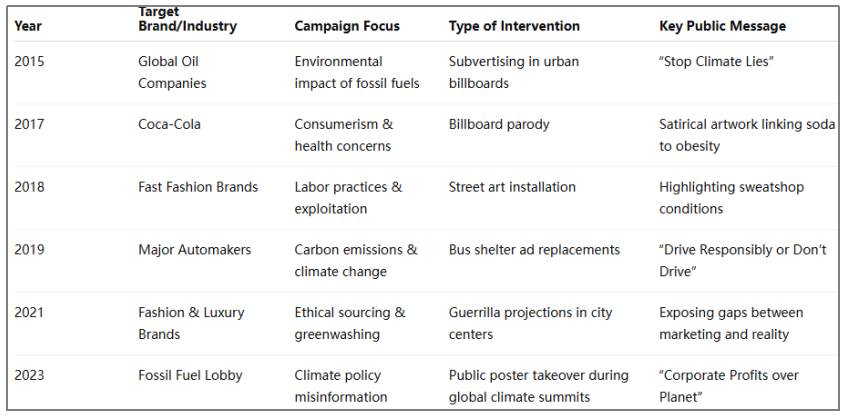
(Table 1- Examples of Brandalism Campaigns and Their Focus Areas)
This form of advertising resistance mirrors a broader lineage of cultural disruption, rooted in the anti-consumerist strategies of culture jamming and détournement. Culture jamming itself is a tactic used across various protest movements to subvert media culture and its mainstream institutions, reappropriating corporate messages to expose underlying power structures and critique consumerism. Brandalism builds on this legacy by deploying artistic activism in public spaces to disrupt the pervasive influence of corporate messaging and cultivate public dialogue around issues that are often marginalized in commercial advertising.
While the activism behind Brandalism is rooted in critique and protest, the phenomenon underscores fundamental tensions in our cultural relationship with advertising. Advertising is omnipresent and deeply embedded in the urban environment; it shapes perceptions of identity, consumer desire, and social norms. Critics argue that this proliferation of marketing messages contributes to visual pollution and exerts disproportionate influence over cultural narratives. Activists within Brandalism view their interventions as reclaiming communal spaces for democratic expression, resisting what they interpret as corporate colonization of public discourse.
Cultural Implications for Marketers and Brand Strategy
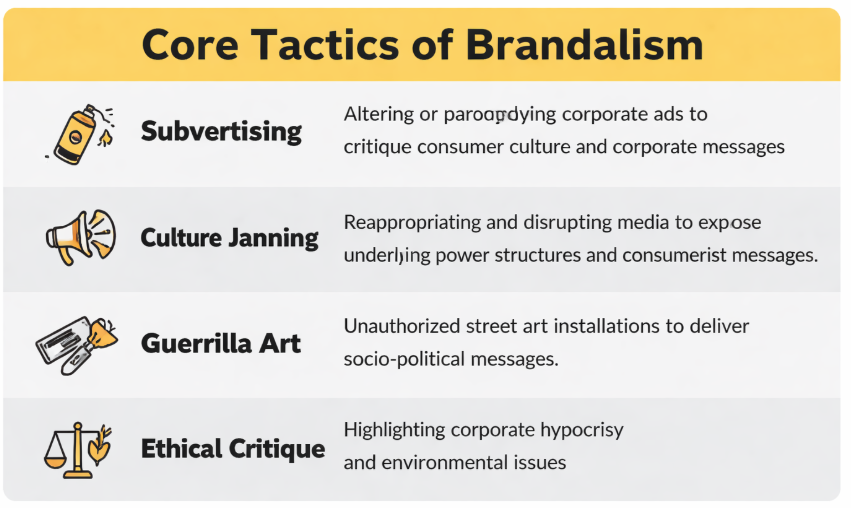
(Table 2- Number of Documented Brandalism Campaigns by Industry 2015) 023)
For contemporary marketers, the emergence and growth of Brandalism pose important questions about the cultural legitimacy of advertising practices and the shifting dynamics of audience engagement. Traditionally, brand communication strategies have focused on controlling messages through targeted channels, optimizing reach and frequency to cultivate familiarity and drive consumption. However, Brandalism challenges this paradigm by demonstrating that corporate messaging can be appropriated, remixed, and turned into tools for critique. Marketers must understand that audiences are increasingly equipped to reinterpret and repurpose brand narratives in ways that can undermine or challenge brand authority.
One implication of Brandalism for marketers is the growing importance of authenticity and cultural resonance in brand communication. In an environment where audiences are hyper-attuned to corporate influence and social responsibility, brands that fail to align their messaging with broader societal values run the risk of being critiqued not only by competitors or regulators, but by consumers themselves. The use of subvertising by Brandalism activists often highlights perceived inconsistencies between a brand’s public messaging and its actual social or environmental impact—effectively holding brands accountable in the public eye.

For example, Brandalism’s recent actions against global oil and fossil fuel companies involved replacing hundreds of commercial adverts in urban centers with satirical artwork that draws attention to environmental concerns and accusations of misinformation. These campaigns do more than simply demand corporations change their practices; they also leverage the visual language of advertising itself to redefine the terms of public discourse. Marketers must take note: audiences are not only reacting to messages but also responding to the broader cultural context in which those messages are produced and received.
Brandalism also highlights the rising significance of ethical considerations in marketing strategy. Consumers today increasingly factor social and environmental values into their perceptions of brands. When activists hijack advertising spaces to highlight dissonances between corporate behavior and environmental responsibility, it places pressure on marketers to anticipate not only traditional competitive responses, but also sociocultural critiques that can emerge from outside the corporate sphere. This environment suggests that integrated brand strategies must go beyond superficial alignments with social issues and instead embody deeper commitments to ethical practices.

This movement also underscores the potential for participatory culture to reshape how brands think about engagement. Brandalism’s tactics rely on collective participation, with artists and activists collaborating across borders to challenge dominant narratives. In contrast, many traditional marketing campaigns are designed to elicit passive consumption rather than active participation. Marketers who succeed in fostering genuine consumer engagement will likely be those who invite participation in co-creative or value-driven initiatives, rather than those who simply broadcast messages in pursuit of transactional goals.
Yet the implications of Brandalism are not limited to critiques alone; some aspects of the movement may inspire innovation in marketing. The surprise, disruption, and virality that characterize subvertising can also inform guerrilla marketing and experiential campaign strategies. Indeed, some brands have experimented with avant-garde street installations and creative stunts that blur the lines between advertising and art, engaging consumers through unexpected encounters that generate organic word-of-mouth and social media amplification. This demonstrates that while Brandalism critiques the coercive nature of traditional advertising, its techniques can offer valuable insight into how messaging may be crafted to resonate more meaningfully with audiences.

The increasing prevalence of protest branding also intersects with broader consumer resistance trends. Beyond Brandalism, research into antibrand actions illustrates that consumers are likely to react negatively when they perceive that brands misrepresent social causes or attempt to co-opt activism for commercial benefit. Consumers" antibrand actions can range from vocal criticism to organized boycotts, reflecting a growing expectation that brands behave ethically and engage honestly with societal issues. This shift places additional pressure on marketers to be reflexive and culturally literate in their strategies.
In light of this evolution, marketers must rethink their approaches to corporate narrative control. Rather than viewing consumer resistance solely as a threat to brand equity, savvy marketers can position their strategies to engage with cultural critique constructively. Brands that embrace transparent communication, demonstrate principled leadership, and foster dialogs with consumers about societal issues may not only withstand criticism but also build stronger relational bonds with audiences who value authenticity and accountability.
(This post may contain affiliate links; at no extra cost to you, we may earn a commission if you purchase through these links. Our recommendations are independent and based on our editorial judgment.)
Updated February 6, 2026
About the Author
Alex Morgan is a cultural strategist and marketing analyst with over a decade of experience exploring the intersection of advertising, activism, and public engagement. Their research focuses on consumer behavior, guerrilla marketing, and the social implications of corporate communication, providing insights into how brands can navigate cultural critique and ethical challenges in modern marketplaces
References
Brandalism. (2019).Car subvertising and climate breakdown artist call-out(Version 6).