Is GDP Still the Best Measure of Success?
February 8, 2026
In this Article:
● GDP measures the total market value of goods and services produced in a country.
● It does not account for income inequality, non-market work, or environmental costs.
● Alternative metrics like HDI, GPI, and GNH offer a broader view of well-being.
● Policymakers use these metrics to guide sustainable and socially inclusive development.
● GDP remains useful but should be part of a wider set of indicators for progress.
Estimated Reading Time: 10.2 minutes ┃Post by Andrew Harrison
The Shortcomings of GDP in Capturing True National Progress
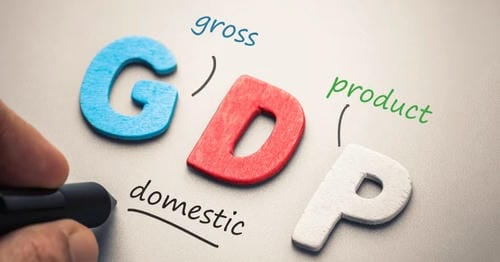
Gross Domestic Product (GDP) has long served as the primary yardstick for gauging a nation’s economic performance. Developed in the mid-20th century to measure post-war economic output, GDP quantifies the total market value of all final goods and services produced within a country over a specific period. However, this focus on aggregate economic activity has revealed significant limitations when GDP is interpreted as a comprehensive indicator of societal success or well-being. Economists and policymakers now increasingly debate whether GDP, by itself, remains sufficiently robust for the complex realities of modern economies.
One of the most fundamental criticisms of GDP is that it assesses only the size of economic activity without accounting for the distribution of that activity among citizens. A rising GDP can mask deep structural inequalities, as the metric does not reveal how income and wealth are shared across the population. In practical terms, a nation might enjoy robust economic growth while a large segment of its citizens experiences stagnant wages or limited access to essential services, a situation GDP alone would not highlight. This inability to capture income distribution means that GDP can offer an incomplete, and at times misleading, depiction of actual societal welfare.

GDP also fails to incorporate non-market activities that contribute substantially to societal well-being. Household work, volunteer services, and leisure time are all excluded from conventional GDP calculations because they do not involve formal market transactions. Yet these components play an essential role in quality of life and community resilience. The omission of such factors results in GDP underestimating the full spectrum of economic contributions and human experience.
Environmental sustainability represents another domain where GDP’s limitations are pronounced. Traditional GDP aggregates economic activity without differentiating between “good" and “bad" outputs. Economic actions that degrade natural ecosystems—such as intensive resource extraction, deforestation, or pollution-producing industrial production—can contribute to higher GDP figures, even as they undermine the ecological foundations of future prosperity. In this regard, GDP may inadvertently reward activities harmful to long-term sustainability, because it does not subtract the environmental costs associated with growth.
The rise of service-based and technology-driven economies further complicates GDP’s relevance. Much of the value created in the modern economy arises from intangible or digitally mediated activities—such as software services, online platforms, and shared information ecosystems—that are difficult to quantify through traditional GDP metrics. There are instances where technology enhances consumer welfare even as measured GDP appears stagnant, simply because GDP tends to undervalue non-market efficiencies and innovations that lower costs or expand access to services.
Given these constraints, economists have increasingly questioned whether GDP should remain the definitive barometer of national success. Critics argue that relying exclusively on GDP can skew policy decisions toward short-term economic expansion at the expense of long-term human and environmental well-being. This critique has gained traction in public discourse and policy forums, with some urging a fundamental shift in the way national progress is conceptualized and measured.
Alternative Metrics and Emerging Frameworks for Assessing Progress
In response to GDP’s shortcomings, a number of alternative metrics have emerged that aim to provide a more holistic view of societal progress. These measures incorporate dimensions of well-being that extend beyond economic transactions to include factors such as health, education, environmental sustainability, and subjective happiness.
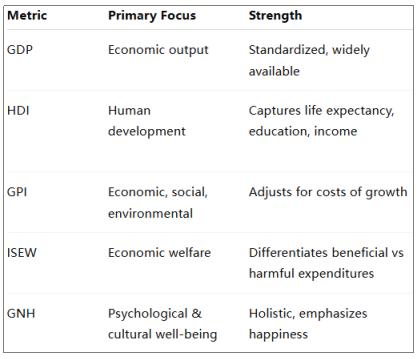
(Table 2- Comparative Focus of GDP vs Alternative Measures)
One of the most well-known alternatives is the Human Development Index (HDI), developed by the United Nations Development Programme. HDI combines data on life expectancy, education levels, and per capita income to produce a composite score reflecting broader dimensions of human development. By integrating social indicators alongside income, HDI offers a richer picture of population well-being than GDP alone.
Another metric gaining attention is the Genuine Progress Indicator (GPI), which adjusts traditional GDP figures by accounting for social and environmental costs. GPI adds the value of unpaid work such as household labor and volunteer services, while subtracting the economic costs associated with pollution, income inequality, and resource depletion. This approach seeks to distinguish between economic activities that contribute to genuine societal welfare and those that merely inflate monetary output.
The Index of Sustainable Economic Welfare (ISEW) is a related measure that also attempts to refine GDP by incorporating considerations of income distribution, environmental degradation, and the value of domestic services. Similar to GPI, ISEW challenges GDP’s narrow focus by recognizing that not all expenditures contribute positively to sustainable welfare.

In some countries, policymakers have gone further by embedding well-being into formal policy frameworks. For example, Australia’s “Measuring What Matters" initiative tracks indicators across themes such as health, security, sustainability, and social cohesion, reflecting a broader commitment to assessing progress beyond GDP. Other nations have experimented with unique indices such as Gross National Happiness (GNH) in Bhutan, which explicitly prioritizes psychological well-being and cultural values as central pillars of national success.
Beyond composite indices, economists also advocate for more granular metrics that capture specific aspects of economic and social life. Measures such as the Multidimensional Poverty Index (MPI) assess multiple deprivations experienced by households in areas including health, education, and living standards, offering insights into poverty that income statistics alone cannot provide.
Other innovative approaches include inclusive wealth indexes that quantify the value of natural, human, and physical capital alongside economic output, and social progress indices that focus on outcomes like nutrition, personal safety, and access to basic needs. These alternative measurements underscore the growing recognition that a single figure like GDP per capita cannot fully encapsulate the multi-faceted nature of human welfare.
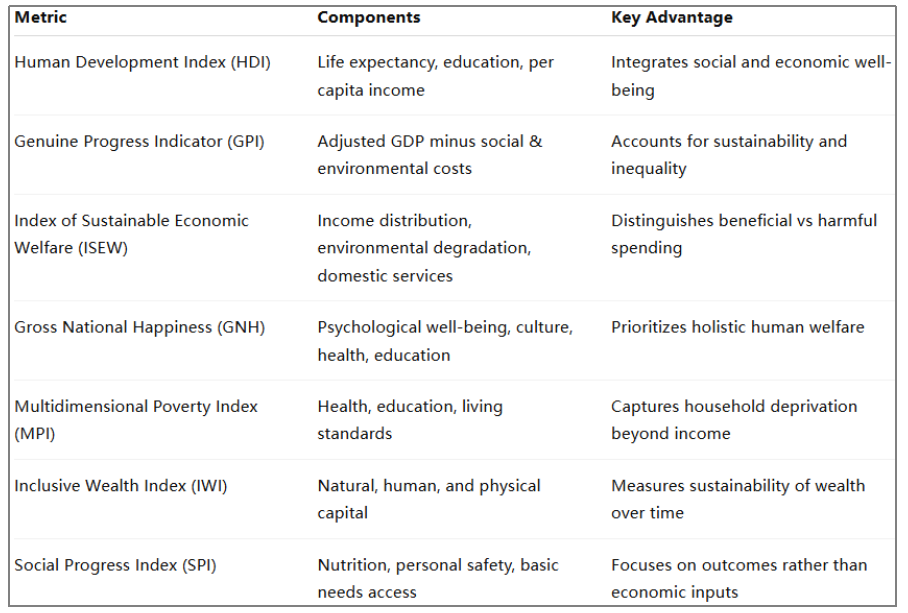
(Table2- Alternative Metrics to GDP)
Despite the proliferation of alternative metrics, there is no consensus on a single replacement for GDP. Each framework carries its own methodological complexities and data challenges, and none have achieved the same global prevalence as GDP. Moreover, some economists defend GDP’s continued utility, arguing that it remains the most widely available and standardized measure of economic activity, even if it does not capture all dimensions of societal well-being.
Nonetheless, the broader trend in both academic and policy circles suggests that GDP should be understood as one component within a broader “dashboard" of indicators rather than as an all-encompassing measure of success. This shift reflects a deeper appreciation for multidimensional progress and the need to align economic policy with long-term human and environmental sustainability.
(The views expressed in this article are solely those of the author and do not necessarily reflect the official position of this blog, its partners, or affiliates. Information provided is for general insight only and should not be taken as professional advice.)
Updated April 6, 2026
FAQs:
1. Why is GDP insufficient for modern, service- and technology-driven economies?
Modern economies generate value from intangible assets like software, digital platforms, and data ecosystems. Many of these contributions reduce costs, enhance access, or improve quality of life without being fully captured in traditional GDP metrics, leading to an incomplete picture of societal progress.
2: Why is it important to look beyond GDP?
Sole reliance on GDP can skew policy toward short-term growth while neglecting inequality, environmental sustainability, and quality-of-life factors. A multidimensional approach allows governments, businesses, and societies to make decisions aligned with long-term human welfare, ecological balance, and equitable economic development.
About the Author
Andrew Harrison is an economist specializing in development and sustainability metrics. With extensive experience in economic policy analysis and international research, she focuses on improving national indicators to align economic growth with societal well-being and environmental stewardship.
References
[1] World Finance. Why GDP is no longer the most effective measure of economic success.
[2] Jack Peat. The London Economic. (2022). Policymakers urged to stop using GDP to measure success.
[3] Fiveable. (2025). Limitations of GDP as a measure of well-being.
[4] WhyE. (2023). What are the limitations of using GDP as a measure of economic well-being?