What Marketers Must Learn from Emerging-Market Brand Resilience?
March 5, 2026
Key Highlights:
● Emerging markets are now major drivers of global economic growth and brand resilience.
● Cultural fluency and localized product customization are essential for success.
● Distribution agility and digital adoption are critical for market penetration.
● Operational flexibility helps brands navigate institutional and economic volatility.
● Early visibility and culturally resonant messaging strengthen long-term consumer loyalty.

Estimated Reading Time: 8 minutes┃Post by Priya Menon
The Rising
Influence of Emerging Markets on Global Brands
In today’s interconnected economy, traditional
Western markets no longer hold the sole claim to growth narratives. For decades, corporations
charted expansion strategies that went from North America to Europe and then trickled outward.
Now, the momentum has shifted: a significant portion of future growth and brand resilience
derives from regions that historically were relegated to secondary importance. Emerging
markets—broadly defined as countries transitioning toward higher-income status with deepening
financial and consumer sectors—are predicted to contribute approximately 65 percent of global
economic growth by 2035, bolstered by favorable demographics, urbanization, and rising
manufacturing capacity.
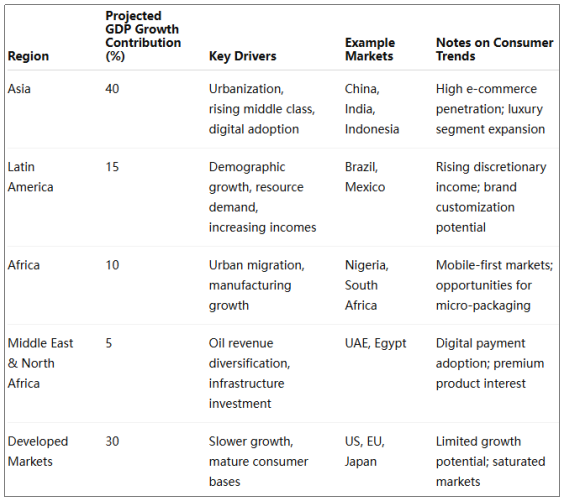
(Table 1- Projected Contribution of Emerging Markets to Global Economic Growth 2023) 035)
This macroeconomic trajectory yields corresponding implications for global brand strategies. Multinationals increasingly assess emerging markets not as peripheral expansions but as core engines of revenue growth and long-term viability. International investment forecasts underscore that consumer bases in Asia, Latin America, and parts of Africa are expanding faster than in the developed world, driven by a burgeoning middle class, rising discretionary incomes, and accelerated digital adoption. Rather than reacting to mature-market saturation, forward-looking brands reallocate strategic resources to those regions where demand curves remain steeply inclined.
The shift in focus is already materializing in the practices of major global firms. Consumer goods companies, for example, have reported sustained double-digit growth quarters underscored by emerging-market performance. One multinational company noted that markets such as China, India, and Brazil today represent roughly 42 percent of core net revenues—a figure analysts predict could approach near parity with developed-market revenue within the next decade. Likewise, geographically localized brand extensions and product customizations are helping global beauty firms and consumer brands penetrate deeper into markets like India, where luxury segments are projected to quintuple in value over the next decade.

Understanding this macro shift is not simply about chasing volume; it’s equally about leveraging emerging markets as laboratories of innovation. Companies that tailor their offerings to diverse consumer preferences in these markets often discover new value propositions that, when refined, can be transplanted back into more mature economies. This dynamic of reciprocity—sometimes referred to in business literature as “reverse innovation”—suggests that products and marketing models devised to address the nuanced needs of emerging consumers may ultimately influence the global brand playbook.
Learning from
Emerging Markets: Strategic Imperatives for Brand
Resilience
To transform opportunity into sustained brand resilience, marketers must
pivot from conventional Western-centric models and embrace strategies that reflect the realities
and complexities of emerging markets.
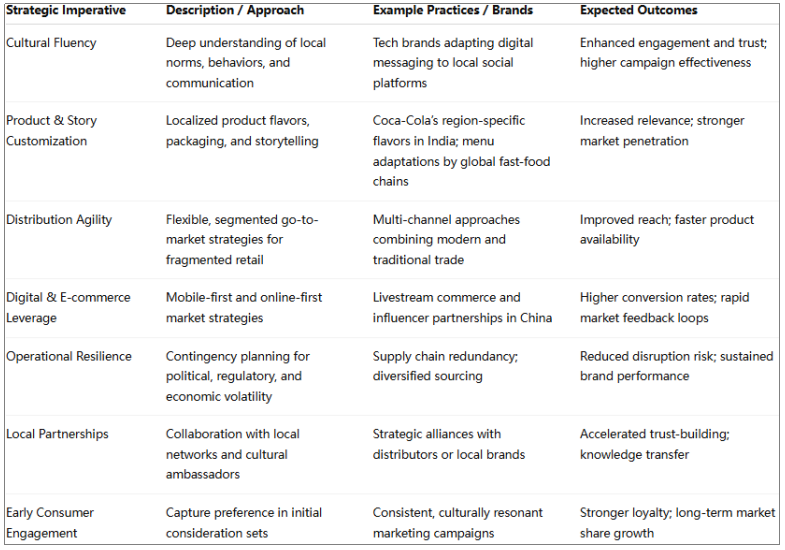
(Table 2- Strategic Imperatives for Global Brands in Emerging Markets)
The first imperative is cultural fluency. Successful brands invest in understanding local consumer behavior and communication norms rather than imposing a one-size-fits-all global campaign. For example, when global tech brands adapt digital messaging to resonate with regional expectations and social norms across different social platforms, they build deeper consumer trust and engagement.
Customization of products and localized storytelling are not optional but foundational. Global soft-drink and quick-service restaurant companies have achieved market penetration by reshaping their product portfolios to mirror local preferences. Coca-Cola’s introduction of region-specific flavors in India, aligned with cultural taste profiles, and the adaptation by fast-casual brands of menu items that respect local palates are illustrative of effective glocalization strategies. Similarly, companies that innovate packaging and pricing—such as offering smaller, more affordable units in low-income urban districts—create brand accessibility without diluting value.
Another lesson from emerging markets is the prioritization of distribution agility. Unlike mature markets with established retail infrastructures, many emerging markets exhibit fragmented retail networks, demanding a mix of modern and traditional trade strategies. Research from leading management consultancies highlights that firms which develop segmented go-to-market models, optimize partnerships with local retailers, and support last-mile distribution via digital channels consistently outperform competitors.

Digital ecosystems have proven especially transformative. Emerging markets often leapfrog legacy infrastructure through widespread mobile adoption and e-commerce engagement. For instance, in China, e-commerce accounts for an overwhelming share of sales, facilitated by livestream marketing and influencer ecosystems that rapidly scale brand visibility and conversion. Brands that harness data analytics and AI to personalize marketing, anticipate local trends, and streamline consumer journeys can cultivate a degree of responsiveness that is integral to resilience. Emerging-market marketers are already testing rapid creative iterations and localized measurement frameworks, enabling them to test, refine, and scale faster than traditional quarterly planning cycles allow.
Beyond digital innovation, a critical insight from these markets involves navigating institutional volatility. Political, regulatory, and economic landscapes in emerging markets may fluctuate more frequently than in developed economies. Resilience thus involves designing operational buffers—such as supply chain redundancy, diversified sourcing, and contingency planning—that anticipate disruption rather than merely react to it. Academic research on monetary strategies highlights how emerging economies themselves deploy countercyclical policies to stabilize growth in the face of dominant-currency pressures, suggesting that corporate plans also benefit from built-in flexibility.

Furthermore, emerging-market engagements increasingly demonstrate the value of partnerships. This encompasses collaborating with local business networks, cultural ambassadors, and established distribution platforms to accelerate brand trust and market penetration. Strategic alliances serve not only market entry functions but also knowledge transfer roles, enabling global brands to internalize local insights more rapidly and sustainably.
Finally, the psychological contract between brands and consumers continues to evolve. Research indicates that emerging-market consumers demonstrate strong brand loyalty once a brand becomes part of their initial consideration set—a phenomenon that underscores the importance of visibility and relevance in early consumer decision stages. Marketers who focus on culturally resonant, consistent messaging across touchpoints can establish preference early and fortify long-term loyalty that persists even as competitive dynamics shift.
FAQs
1. Why are emerging markets critical for global brand growth?
Emerging markets—countries with growing incomes, urbanization, and consumer sectors—are projected to drive roughly 65% of global economic growth by 2035. Brands can no longer rely solely on traditional Western markets; success increasingly depends on capturing consumers in Asia, Latin America, and Africa, where middle-class populations and digital adoption are rapidly expanding.
2. How do brands
customize products and marketing effectively?
Effective strategies include:
Product adaptations: Region-specific flavors or offerings, e.g., Coca-Cola flavors in India.
Localized storytelling: Campaign narratives reflecting cultural values.
Packaging and pricing innovations: Smaller or more affordable units for low-income districts.
3. What is the overarching lesson for global marketers?
Marketers must move beyond Western-centric strategies. To achieve long-term resilience, they need cultural fluency, product and messaging customization, distribution agility, digital responsiveness, operational flexibility, and local partnerships. Emerging markets are not just growth targets—they are sources of strategic insight, innovation, and enduring consumer loyalty.
(Market trends discussed here are observational and not recommendations to buy, hold, or sell any asset or product.)
Updated April 1, 2026
About the Author
Dr. Priya Menon is a global marketing strategist and economist specializing in emerging-market growth. With over 15 years of experience advising multinational corporations, she focuses on consumer behavior, digital ecosystems, and cross-cultural brand strategy. Her research explores how global brands can leverage insights from emerging economies to drive innovation, resilience, and sustainable growth.
References
[1] A comparative analysis of digital marketing strategies of Xiaomi in Russia and China: Cultural adaptation and consumer engagement. (2026). arXiv.
[2] Unlocking untapped fortunes: Top emerging market plays in today's high-risk geopolitical climate.. Gov.capital.
[3] Hard Beat Communications. (2025). 2025 marketing trends: Emerging market brands. Hard Beat Communications.
Don’t leave just yet—there are plenty more articles to help you understand trends, boost your campaigns, and grow your business!
Recommended for you: