How Small Cities Are Poised to Drive the Next Economic Boom?
March 5, 2026
Key Highlights:
● Small and mid-sized cities are increasingly driving job growth, population inflows, and economic dynamism, challenging the traditional dominance of large metropolitan hubs.
● Remote work, lower living costs, and business-friendly local policies enhance the attractiveness of smaller cities for residents and companies.
● Entrepreneurial activity, workforce development, and industrial diversification are key drivers of small-city economic expansion.
● Distributed economic growth in smaller cities contributes to regional resilience, reduced inequality, and broader national economic stability.

Estimated Reading Time: 9 minutes ┃ Post by Sylvia John
The Shift in Economic Momentum Toward Smaller Cities
In the ongoing evolution of global economic patterns, a significant emergence is occurring beyond the traditional powerhouses of metropolitan megacities: small and mid-sized cities are increasingly becoming key contributors to economic growth. Conventional wisdom for many decades has centered on large urban centers as the principal drivers of innovation, job creation, and productivity. Yet, recent empirical data and economic analyses suggest a marked shift—smaller cities are now outperforming larger ones in key metrics that signal a robust economic trajectory. A notable commentary published by the Manhattan Institute highlights that many of the fastest-growing metropolitan regions in the United States today have populations under one million and are exhibiting strong job growth and expanding economic opportunities. Indeed, 27 of the 30 fastest-growing U.S. regions in jobs growth were small or mid-sized metropolitan areas, according to Forbes" Best Cities For Jobs survey data referenced in the Institute’s evaluation.
Population trends reinforce this shift. Smaller cities like Nampa, Idaho, have experienced population growth exceeding 15 percent between 2018 and 2022, along with falling unemployment rates and increasing economic dynamism. Such trends reflect a broader pattern in which small cities are not only attracting new residents, but are also reinforcing local labor markets and productivity.

This shift in momentum arises from several interconnected factors. First, remote work and digital infrastructure advancements have reduced the necessity for businesses and workers to cluster in high-density urban cores, creating opportunities for smaller cities to attract talent seeking affordability and quality of life. Second, local policy frameworks that emphasize business-friendly regulations, tax incentives, and strategic infrastructure investment have enhanced the relative attractiveness of smaller cities for emerging enterprises. Third, lower cost structures in smaller cities—including real estate, wages, and operational costs—have helped businesses achieve greater scalability and sustainability outside traditional large metropolitan hubs.
While some scholars argue that small cities are unlikely to replicate the scale and intensity of innovation seen in major tech hubs such as Silicon Valley, especially in high-tech sectors, this perspective does not diminish their potential as engines of diversified economic growth. Rather, it underscores the complementary role of small cities in the national and global economic ecosystem: they may not entirely replace the function of established mega-regions, but they contribute significantly to broadening the spatial distribution of economic activity.
Drivers of Economic Expansion in Small Cities
Demographic and Quality-of-Life Factors
Population inflows are one of the most visible metrics of a city’s economic vitality. Cities such as those highlighted in recent rankings are not only attracting new residents but are doing so at rates that outpace many larger metropolitan areas. For instance, small cities like North Port, Florida, and Georgetown, Texas, recorded population increases of 28 percent and 22 percent, respectively, over recent five-year periods, while also seeing significant housing demand and investment growth.
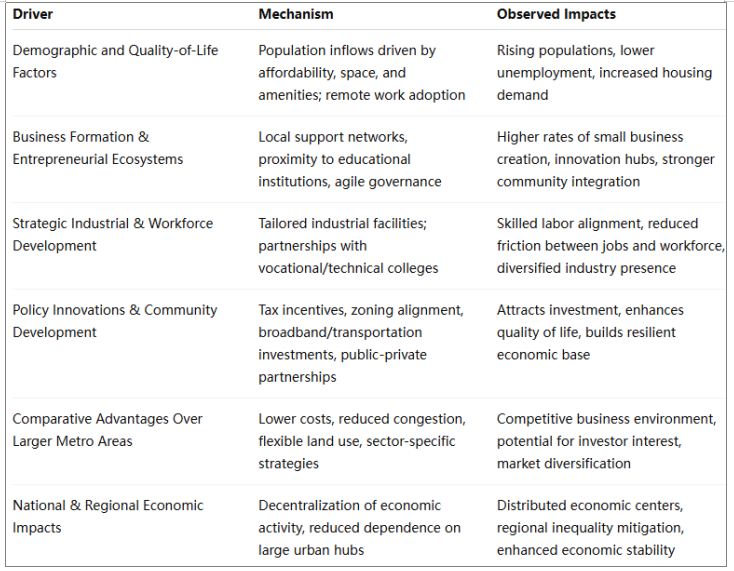
(Table 1- Key Drivers of Economic Expansion in Small Cities)
Such demographic trends reveal that people are increasingly valuing affordability, space, and access to community amenities—attributes more commonly found in smaller cities than in dense urban cores. In a context where remote work has become normalized, workers are no longer constrained to high-cost urban centers, and they are instead seeking regions that offer economic opportunity alongside lower living costs.
Business Formation and Entrepreneurial Ecosystems
Entrepreneurial activity is another area where smaller cities are gaining prominence. Some smaller metropolitan areas have witnessed significant increases in business formation rates—an indicator of both confidence and opportunity in local economic conditions. For example, cities like Katy, Texas experienced a 12 percent rise in new small business creation, outpacing larger neighbors in both absolute and relative terms, according to recent entrepreneurial surveys.
This entrepreneurial momentum is supported by several factors typical of smaller cities: proximity to educational institutions that supply talent and research capabilities, community networks that foster collaboration, and local governance that is agile in responding to economic trends. These elements combine to create ecosystems where small businesses can thrive—often with stronger community integration and local support than in sprawling metropolises.
Strategic Industrial and Workforce Development
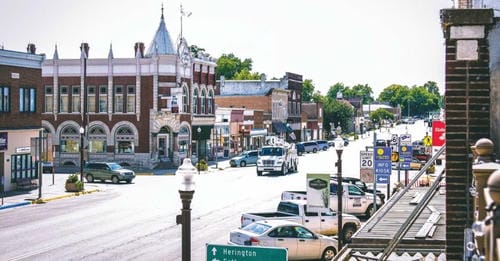
Industrial diversification and workforce training initiatives are also enhancing economic prospects in small cities. In certain regions, local governments and private partners are designing industrial spaces and infrastructures tailored to small and medium enterprises, addressing a historical gap in smaller urban centers. In Seguin, Texas, for instance, industrial developers are constructing facilities specifically sized for smaller manufacturers and logistics operators, recognizing that not all economic development must be anchored in large-scale industrial megaprojects.
Workforce development complements these physical investments. Partnerships with technical colleges and vocational training centers in many smaller cities are aligning local talent pipelines with emerging industry needs, reducing the friction between job availability and workforce preparedness. This alignment not only increases employability for local residents but also attracts employers seeking stable and skilled labor markets.
Policy Innovations and Community Development
Local policy innovation plays a critical role in shaping the economic landscapes of smaller cities. Many communities are actively pursuing progressive economic development strategies, such as aligning zoning codes with emerging industrial trends, offering tax incentives to growing industries, investing in broadband and transportation infrastructure, and facilitating public-private partnerships to revitalize downtown and commercial districts. These creative approaches, documented by urban development practitioners, aim to balance growth with preservation of local character and community identity.
Small cities that successfully implement these strategies are better positioned to attract not just population and jobs, but also cultural and recreational amenities that enrich overall quality of life, creating reinforcing cycles of investment and growth. Additionally, smaller urban centers that integrate sustainability and local ecological considerations into their planning frameworks tend to build more resilient economic bases—capable of adapting to global shifts such as green energy transitions and digital transformation demands.
Comparative Advantages Over Larger Metro Areas
The growing prominence of smaller cities also owes to certain comparative advantages they hold over larger metropolitan areas. Lower cost of living, reduced congestion, and greater flexibility in land use planning contribute to a favorable business climate that can outcompete larger urban centers in specific industry niches. Small cities often have the flexibility to tailor economic strategies to specific regional strengths—whether in logistics, manufacturing, services, or specialized sectors such as energy or tourism.
From an investor’s perspective, this diversification and potential for competitive real estate and operational costs can present new opportunities in markets that are less saturated and potentially undervalued relative to larger cities. Investors and firms seeking to mitigate risk and diversify locational exposure are increasingly evaluating smaller cities as viable alternatives.
Impacts on National and Regional Economies
The implications of this shift are significant at both national and regional scales. Economies that embrace the growth of smaller cities do not merely spread economic activity more evenly; they also build redundancy and resilience into their broader economic systems. As smaller cities grow, they contribute to a more distributed network of economic centers, which can reduce regional inequality and mitigate the risks of overdependence on a few large urban hubs.
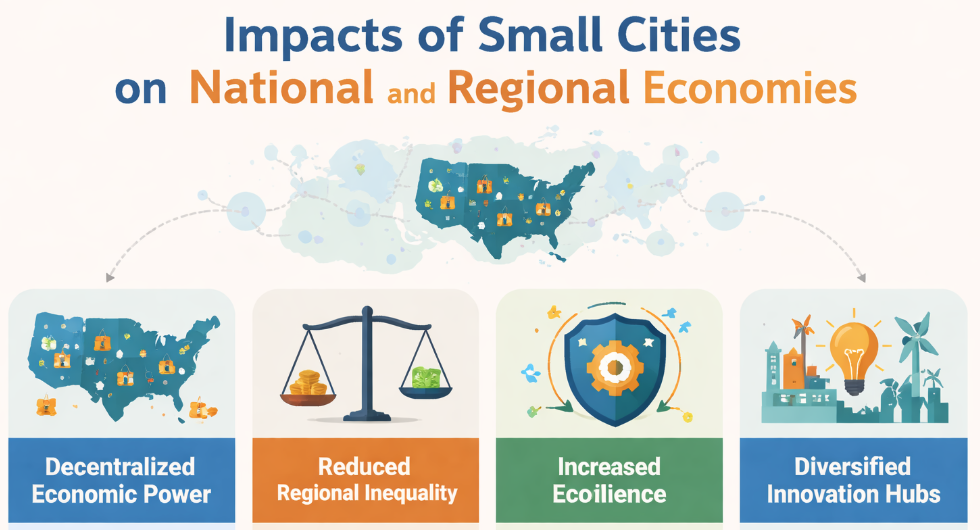
In the U.S., for example, the rise of numerous small metropolitan regions as growth centers suggests a decentralization of economic power that could benefit nationwide economic stability and mobility. Where formerly economic growth might have concentrated in a handful of coastal or global megacities, the expanding influence of smaller cities reflects a broader diversification of economic opportunity and innovation.
In summary, the rise of small cities as engines of the next economic boom is driven by their ability to leverage demographic shifts, entrepreneurial energy, strategic policy innovation, workforce development, and comparative cost advantages. These cities are reshaping the economic landscape, presenting new pathways for growth that complement rather than replace the traditional strengths of larger metropolitan centers. As this trend continues, it may redefine how economies allocate resources, attract talent, and sustain long-term growth in the decades ahead.
(Reference to any specific product, service, or entity does not constitute an endorsement or recommendation by the author or this blog.)
Updated April 7, 2026
About the Author
Sylvia John is an urban economist and policy analyst specializing in regional economic development and urbanization trends. Her research focuses on the growth trajectories of small and mid-sized cities, workforce dynamics, and sustainable urban planning, providing insights for government agencies, investors, and business leaders seeking to understand and leverage emerging economic centers.
References
[1] Kellogg Insight. (2020). Could a small city become the next Silicon Valley? It’s unlikely.
[2] SafeBuilt. (2025). The next frontier: Creative approaches to small town economic development.
Love this article? There’s a wealth of tips, case studies, and strategies waiting for you here"