The Future of Buzz Monitoring and Competitive Edge in 2026
March 11, 2026
In this Article:
● Emerging markets are now major drivers of global economic growth and brand resilience.
● Cultural fluency and localized product customization are essential for success.
● Distribution agility and digital adoption are critical for market penetration.
● Operational flexibility helps brands navigate institutional and economic volatility.
● Early visibility and culturally resonant messaging strengthen long-term consumer loyalty.

Estimated Reading Time: 8 minutes┃Post by Priya Menon
In 2026, the discipline of buzz monitoring has evolved far beyond mere tracking of online mentions. What was once a tactical exercise in tallying how often a brand name appears on social media has matured into a strategic capability that informs high-stakes decisions across marketing, product development, crisis management, and competitive intelligence. At its core, buzz monitoring captures the volume and sentiment of global conversations — whether on Twitter/X, TikTok, Instagram, blogs, forums, news sites, or review platforms — and translates those signals into actionable insights for brands.
From Data Deluge to
Strategic Insight
During the early 2020s, marketers relied on static reports and periodic
sentiment snapshots that offered only a delayed view of public discourse.
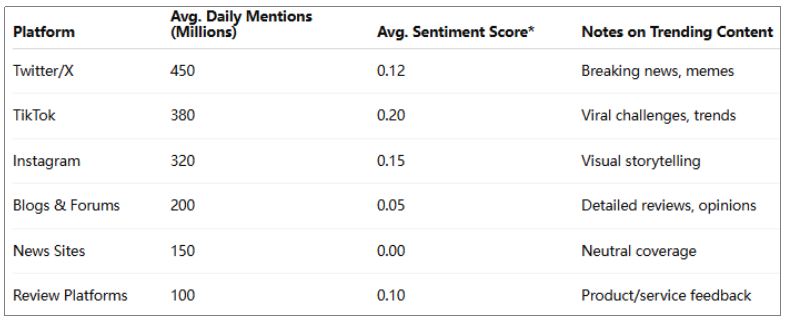
(Table 1- Volume of Daily Social Mentions by Platform 2026)
Today, real-time analysis and AI-driven intelligence reshape this paradigm. Modern social listening and buzz monitoring tools pull in millions to billions of data points daily, applying natural language processing (NLP) and machine learning to detect emergent trends, shifts in sentiment, and conversational patterns as they unfold. This extends the role of buzz monitoring from passive observation to predictive and prescriptive insight generation — enabling brands to anticipate shifts in consumer behavior, align campaigns with cultural moments, and even preempt crises before they escalate.
A brand’s ability to interpret and act on this conversation data in real time has become a competitive edge. Enterprises are no longer benchmarking buzz simply to benchmark; they are using it to refine messaging, optimize content calendars, and calibrate their customer experience strategies dynamically. Brands that once relied on quarterly market research and periodic surveys are pivoting toward continuous listening, gaining nuanced understanding of audience sentiment that directly influences campaign planning, product roadmaps, and cross-functional alignment.

Moreover, buzz monitoring now plays a foundational role in sentiment and reputation management. As digital discourse becomes increasingly fragmented and fast-moving, high buzz can signal opportunity or risk. Real-time monitoring platforms alert teams to spikes in conversation — whether positive excitement around a product launch or a sudden negative narrative gaining traction — enabling quick, calculated responses. This immediacy not only mitigates potential reputational damage but also supports brands in leaning into positive spikes to amplify impact and unlock organic engagement.
Turning
Conversations Into Competitive Advantage
The strategic value of buzz monitoring lies not
merely in the collection of data but in transforming that data into business outcomes.
In 2026, leading marketers treat buzz as a source of market intelligence that complements
traditional analytics and business KPIs. Through advanced dashboards and real-time insights,
teams can observe how consumers talk about their products, competitors, and broader industry
themes. These insights help inform decisions that extend across the customer journey — from
awareness and engagement to conversion and loyalty.
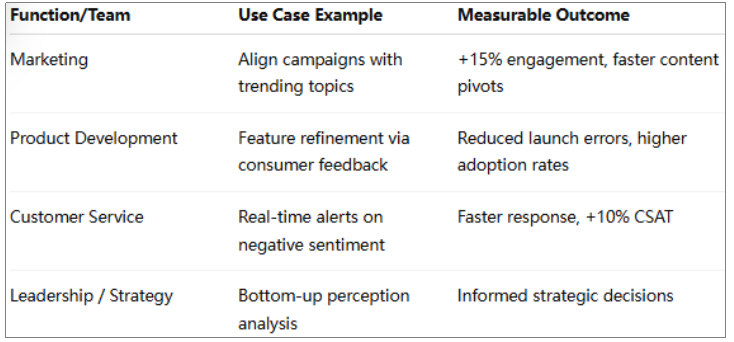
(Table 2- Key Business Outcomes of Buzz Monitoring)
One of the defining advantages of contemporary buzz monitoring is its ability to detect narrative shifts and competitive signals early. Watching competitor mentions and trending topics across platforms offers clues about where market attention is building. These patterns can foreshadow broader behavioral shifts, enabling brands to pivot strategy, reposition offerings, or capitalize on emerging consumer interests before competitors do.
In practice, this means integrating buzz insights into marketing operations and strategic planning. For example, the real-time discovery of a trending topic or viral hashtag can inform content creation on the fly, ensuring that campaigns are aligned with what audiences are actively discussing. Instead of waiting for monthly reports, teams pivot content, media spending, and influencer engagement based on the pulse of the conversation. This agility fosters relevance, relevance drives engagement, and engagement fuels visibility — a virtuous cycle that translates buzz into measurable business performance.

Buzz monitoring also enhances audience understanding, moving beyond broad demographic assumptions to uncover the context and drivers behind conversations. Sentiment analysis tools deconstruct not only what is being said but how and why audiences are responding in particular ways. This rich contextual understanding supports more effective segmentation, more empathetic messaging, and more resonant brand experiences. It also informs crisis readiness; troubling sentiment patterns detected early can trigger rapid response protocols that protect brand reputation and customer trust.
Furthermore, the strategic use of buzz data has implications beyond marketing. Product teams leverage insight from conversations to refine features, packaging, and innovation priorities; customer service teams use real-time alerts to improve responsiveness; and senior leadership gains a bottom-up view of external perceptions that can influence corporate strategy. The integration of buzz monitoring with broader data ecosystems underscores its transformation from a niche tool into a strategic asset that drives alignment across functions.
Technological advancements also play a critical role in scaling buzz monitoring capabilities. AI-augmented platforms enhance real-time detection, pattern recognition, and narrative clustering, enabling brands to sift through volumes of noisy social data with precision and speed. These systems can highlight not just volume spikes but emerging themes, shifts in sentiment polarity, and even predictive indicators of trending topics, empowering marketers to make informed decisions with confidence.

The shift toward real-time buzz intelligence also parallels broader marketing trends that emphasize agility, personalization, and customer-centricity. As consumers engage with brands across an expanding array of digital channels, real-time monitoring provides the situational awareness necessary to meet audiences where they are, speak in their language, and adapt to their evolving needs — all at the speed that digital conversations demand.
In sum, buzz monitoring in 2026 has become integral to building and sustaining competitive advantage. By turning real-time global conversations into actionable strategy, brands are no longer passive observers of public discourse but active participants who leverage insights to shape their narratives, respond to consumer needs, and outmaneuver competitors. This evolution underscores a broader shift in marketing: toward data-driven, responsive, and strategically aligned approaches that place the voice of the consumer at the heart of decision-making.
(Market trends discussed here are observational and not recommendations to buy, hold, or sell any asset or product.)
Updated April2, 2026
About the Author
Dr. Priya Menon is a global marketing strategist and economist specializing in emerging-market growth. With over 15 years of experience advising multinational corporations, she focuses on consumer behavior, digital ecosystems, and cross-cultural brand strategy. Her research explores how global brands can leverage insights from emerging economies to drive innovation, resilience, and sustainable growth.
References
[1] Levine. Meltwater updates "Buzz" with improvements in social monitoring, marketing. CMSWire.
[2] MediaLens. Buzz: Find viral social media trends. MediaLens.
[3] Quid. (2025). Your competitors" mentions reveal emerging market disruptions. Quid.
Keep browsing! Our blog is packed with marketing insights, practical advice, and examples from successful brands!