How Localization Tech Is Redefining Global Content Strategy ?
February 3, 2026
Key Takeaways:
● Localization now extends beyond translation to culturally resonant content experiences.
● AI, automation, and cloud-based platforms enable scalable, real-time localization across markets.
● Multimedia localization—including video and voice—enhances global audience engagement.
● Embedding localization early in the content lifecycle ensures consistency and relevance.
● Cross-cultural collaboration and data-driven optimization are essential for effective global content operations.

Estimated Reading Time: 9 minutes ┃Post by Sofia Chen
In the current era of global commerce, the way brands communicate across borders has fundamentally shifted. No longer is international content strategy confined to broad, one-size-fits-all messaging; instead, it has evolved into a nuanced discipline that leverages advanced localization technology to deliver culturally resonant experiences at scale. Localization is not merely about converting text from one language to another—today’s leading organizations are embedding cultural intelligence into every touchpoint of the customer journey to build relevance, trust, and engagement with audiences around the world. As artificial intelligence, automation, and real-time adaptation tools become more sophisticated, marketers are empowered to scale localized content more efficiently than ever, enabling companies to outcompete in diverse markets while maintaining brand consistency and operational agility. This shift from traditional translation to technology-driven global personalization is redefining how content strategies are conceived, executed, and optimized across international landscapes.
Localization as a Strategic Imperative in Global Marketing
Localization goes far beyond translating text into different languages. It involves adapting every element of content—words, visuals, design, and user experience—to resonate with local audiences. This includes cultural norms, behavioral patterns, purchasing preferences, tone of voice, date formats, and even color symbolism. For example, color meanings differ significantly across cultures: red may signify luck in China but urgency or danger in Western markets. A successful localization strategy must account for these nuances to maintain relevance and avoid unintended misinterpretations.
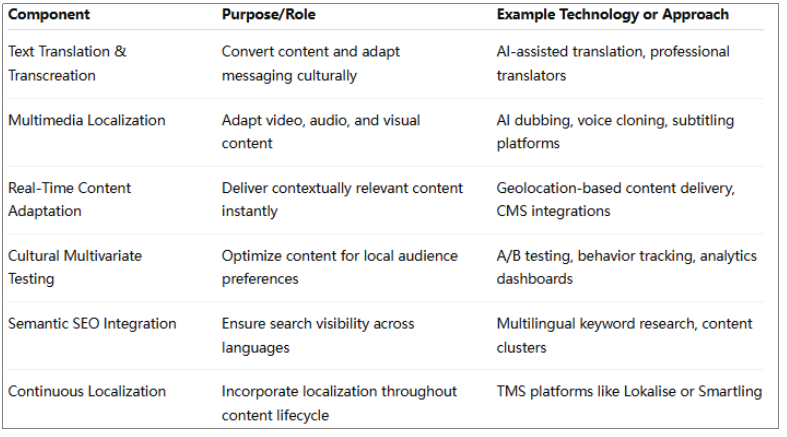
(Table 1- Key Components of Modern Localization Strategy)
Consumer demand for localized content is backed by compelling behavioral data. A substantial portion of online consumers prefer content in their native language, and many will only purchase from websites presented in their local tongue. Organizations that prioritize localization improve customer experience, engagement, and brand loyalty. This is not a superficial preference but a reflection of deeper psychological and cultural drivers that influence purchasing decisions and perceived credibility.
Traditionally, scaling content for international markets required extensive human translation and manual cultural adaptation, processes that were time-consuming and cost-intensive. However, localization technology has disrupted this model. Platforms like cloud-based translation management systems (TMS) and AI-assisted workflows now empower global teams to manage, adapt, and distribute localized content efficiently. This shift has made real-time and continuous localization possible, where digital content—from product releases to marketing campaigns—can be updated across multiple languages almost simultaneously.

In tandem with improved workflows, cultural multivariate testing has emerged as a vital component of international strategy. This methodology enables marketers to test various design and messaging combinations across different markets to identify the most effective localized experiences for each region. By integrating localized testing into the optimization process, companies further enhance conversion and engagement across diverse audience segments.
Technologies Enabling Scalable Localization at Global Scale
The advancement of localization technology has empowered businesses to extend their global content strategies beyond manual processes. Leading platforms in this space are blending human expertise with AI automation to deliver scalable, high-quality localized content across digital properties. Centralized, cloud-based systems integrate with content creation ecosystems to streamline translation workflows, enabling teams to maintain brand consistency while adapting content for local markets.
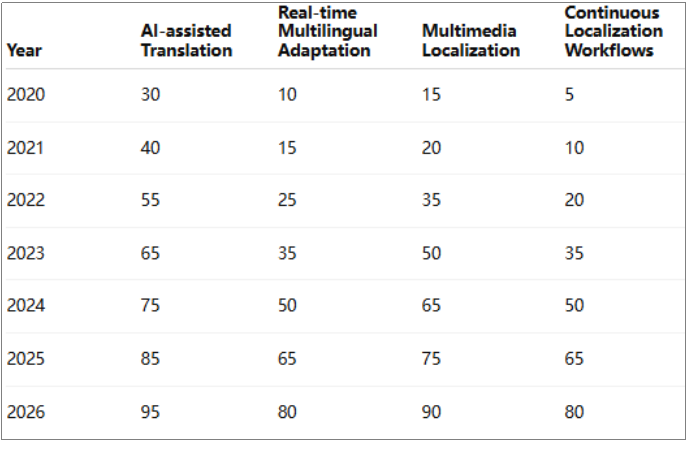
(Table 2- Localization Technology Adoption Trends 2020-026)
Translation management systems like Lokalise highlight this trend by offering centralized platforms that integrate with existing content and development workflows, including CMS tools, design platforms, and source repositories. These technologies support a hybrid model of professional translation, quality-checked machine translation, and contextual AI that selects the most appropriate translation engine based on content type and language pair.
Localization technology continues to extend into new modalities beyond text. AI-assisted dubbing and voice adaptation tools are now enabling creators to produce localized video and audio content at scale, reflecting the growing importance of multimedia in global content strategies. Video, in particular, is a dominant format for global audiences, and automated tools—such as speech-to-text models and AI voice cloning—facilitate multilingual versions of video content without the need for extensive post-production resources.

Real-time multilingual content adaptation is another transformative trend. Today’s technologies allow websites and applications to present localized content instantly based on a user’s geolocation, language settings, or cultural preferences. This dynamic approach enhances user experience by ensuring that content feels native and contextually relevant without manual intervention.
AI and machine learning frameworks also enable more nuanced cultural adaptation through predictive and contextual models. For instance, some platforms use generative AI to assist with creative adaptation (transcreation) rather than literal translation, ensuring that marketing messages maintain emotional impact and cultural resonance. This trend underscores the shift from bilingual translation toward a more sophisticated understanding of cultural storytelling and engagement.
The integration of human oversight with AI tools creates a hybrid workflow that balances speed with quality. Human reviewers ensure that localized content adheres to cultural norms and brand values, while AI accelerates repetitive tasks and scales language coverage. This combined model is increasingly essential as brands expand into markets with diverse cultural and linguistic landscapes.

Building a Scalable Global Content Operation
As localization technology evolves, so too must organizational strategy. Establishing an effective global content operation requires teams to adopt structured workflows and cross-functional collaboration. Content creation should be designed for scalability: source content must be created with international audiences in mind, including modular components, standardized metadata, and consistency in style and tone. By developing a scalable content architecture, teams can reduce duplication, maintain quality, and accelerate rollout across multiple locales.
Localization should be embedded early in the content lifecycle. Instead of treating localization as a final step, global organizations are adopting continuous localization models where translation and adaptation occur concurrently with content creation and publishing. This real-time approach ensures that regional markets receive updated content simultaneously with primary markets, maintaining relevance and competitive parity.
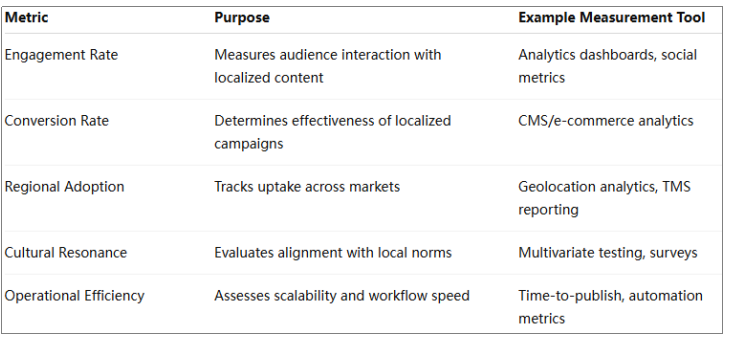
(Table 3- Key Metrics for Evaluating Localized Content Performance)
Cross-cultural collaboration is equally important. Localization success depends on insights from local experts who understand cultural norms, consumer behaviors, and market expectations. Involving regional stakeholders in planning and review loops enhances authenticity and prevents costly missteps that can damage brand reputation.
Data-driven optimization also plays a crucial role. Businesses must continuously monitor performance metrics for localized content to assess engagement, conversion rates, and market response. By analyzing this data, teams can make informed decisions about content updates, cultural adjustments, and strategic priorities. Feedback loops ensure that localization efforts remain adaptive and responsive to evolving audience needs.
Organizational readiness extends to technology selection. Companies should invest in localization platforms that offer robust integration capabilities with the broader marketing ecosystem, including CMS, CRM, analytics, and customer support tools. Scalable localization platforms not only reduce manual workload but also ensure compliance with regulatory requirements and maintain consistency across markets.
Ultimately, scaling localized content is both a strategic and technological endeavor. It requires a cohesive blend of technology, process, and human insight to ensure that brands can truly speak the language—not just literally but culturally—of their global audiences. With the right investments in localization technologies and operational practices, organizations can navigate the complexities of international markets and unlock sustainable global growth.
(Market trends discussed here are observational and not recommendations to buy, hold, or sell any asset or product.)
Updated April 3, 2026
FAQs:
1. What are some key technologies enabling scalable localization?
● Translation Management Systems (TMS): Centralized platforms integrating CMS, design, and development workflows.
● AI-assisted translation and transcreation: Enhance emotional and cultural adaptation, not just literal translation.
● AI dubbing and voice adaptation: Enables localized multimedia content at scale.
● Real-time content adaptation: Adjusts website or app content dynamically based on user location or preferences.
● Data analytics: Tracks performance and informs continuous optimization.
2. How does data inform global content strategy?
Tracking engagement, conversions, and market response allows teams to adjust content based on performance. Analytics provide feedback loops that support cultural refinement, content optimization, and strategic decision-making to maintain relevance in evolving markets.
3. What is the ultimate benefit of technology-driven localization?
Technology-driven localization enables brands to deliver culturally resonant, timely, and consistent experiences at scale. This builds engagement, trust, and loyalty across international markets, while maintaining operational efficiency and supporting sustainable global growth.
About the Author
Sofia Chen is a global content strategist and localization technology specialist with over 12 years of experience guiding multinational brands. She focuses on AI-driven localization, cultural adaptation, and scalable content operations, helping organizations craft globally relevant, culturally nuanced experiences that drive engagement and growth in diverse markets.
References
[1] eContent Innovations. (2025). Content localization: How to reach global audiences effectively.
[2] ClearlyLocal. (2024). Content localization trends and the future of global communication.
[3] TAIA. (2025). Localization trends and the future of global communication.
[4] Linguise. (2025). Top localization trends to watch: A guide for global businesses.
[5] Smartcat. (2024). Localization trends: What’s shaping global content strategy.